For the last seven years I have talked about anamorphic lenses and adapters on my YouTube channel. I had reviewed dozens of adapters until late 2019 when Sirui came out with their 50mm f/1.8 1.33x anamorphic lens.
Since then we’ve seen a flood of new anamorphic lenses from Sirui and other makers, which have worked hard to bring the anamorphic look to filmmakers working on a tight budget. If you’re not familiar with it, anamorphic lenses usually cost tens of thousands of dollars and we, little-budget folks, have always coveted the look they deliver.

If you’re getting into the game now, you’re doing it at what’s probably the best time in forever. There are plenty of options to choose from. You can start with adapters, which cost anywhere between $50 and $3500 and use your own spherical lenses behind them for a look that’s somewhat familiar, or you can get started with one of the many affordable anamorphic lens sets out there.
TAKE ME TO THE ADAPTERS!
While offering great versatility and more affordable prices (depending on your level of commitment), adapters also offer a number of challenges. In the video below I go into detail about many of these challenges. It’s important to clarify I’m not saying adapters are bad. They’re just not for me, as I go through many of them and never get to spend enough time setting one up properly.
A multitude of other enthusiasts love adapters though! They’ve picked up one that delivers the look they like and spent weeks, months, years, perfecting their systems. And there’s not really a formula here, as it becomes a very personal journey of exploration and refinement.
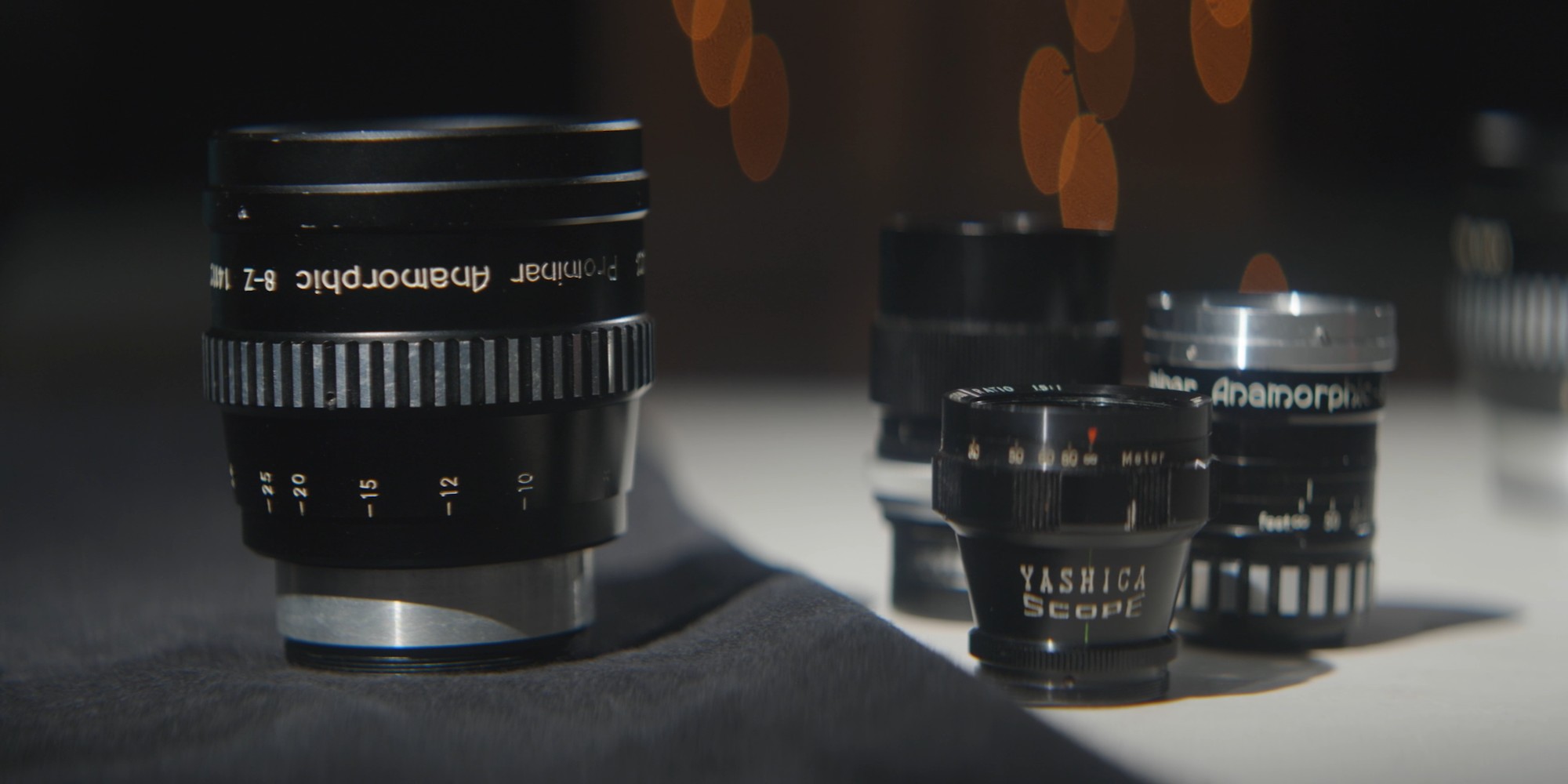
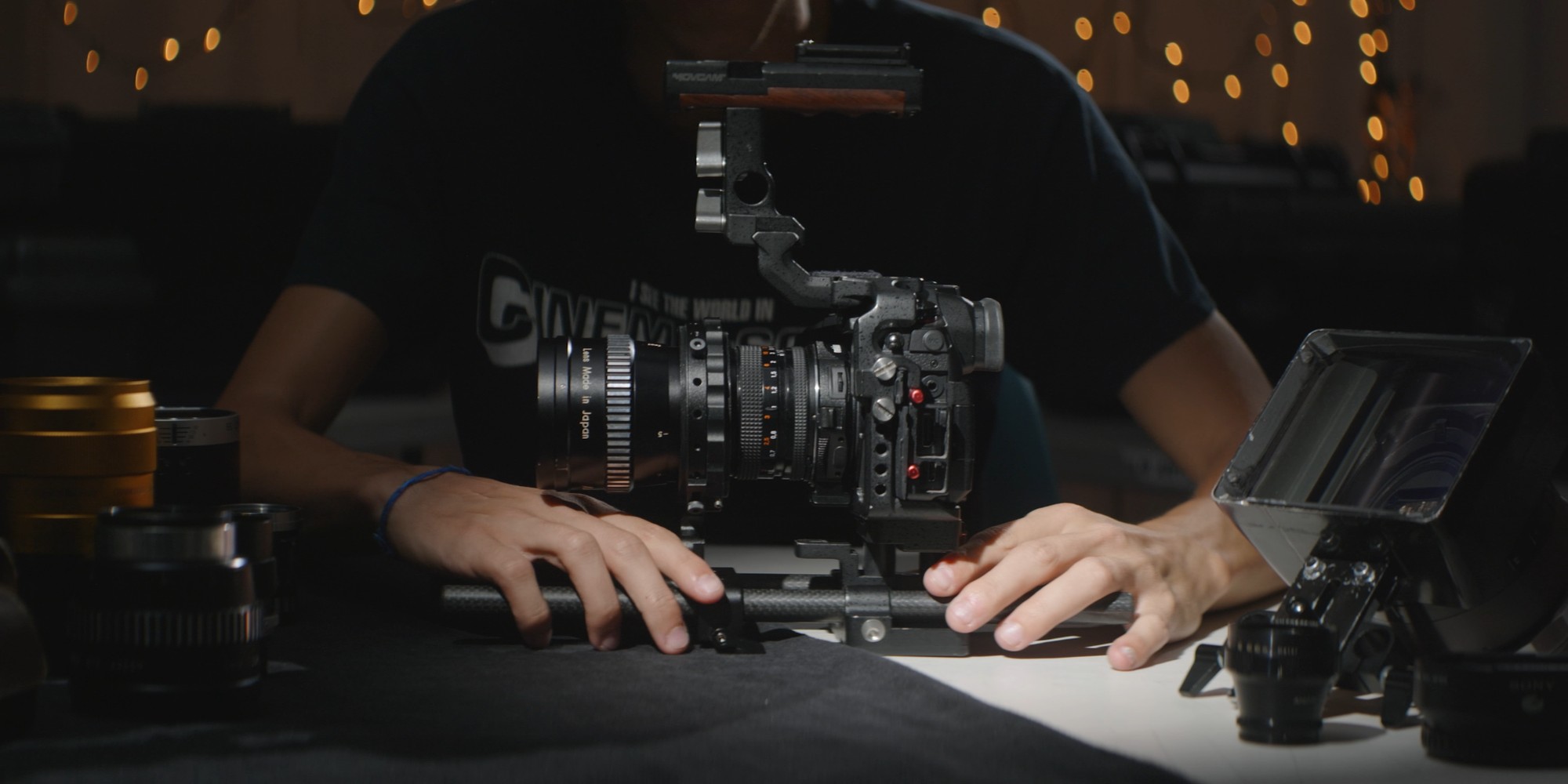
Working with an adapter rig requires you to develop a relationship with your equipment. You know its strengths - and you play to them - and you know its limitations - which you avoid as best you can. It also hits the note of using equipment that’s been around for decades and has been appreciated and revered as tools of a craft. You’re part collector, part lens tech, all patience, when building around an adapter.
Besides the personality of the adapter itself, you get to choose the spherical elements that go behind it. So if you already have a 50mm that you love, you get to see how that pairs up with your chosen adapter. This is a really fun adventure to partake in, but I warn you it takes time. Really. And by rushing it you’re simply missing the good parts.
This is not a carefully crafted evaluation, but I’d say most folks that like using adapters are not focused on making films, but on enjoying the gear and the experience of tinkering with it. The empowerment provided by such gear, the capability to go out and make a film, is a great bonus, but mostly they are solo filmmakers and lens testers. If you see yourself as such, adapters might be for you. Exceptions exist, of course, and I love seeing bigger productions filmed with adapters!
BUDGET ANAMORPHIC LENSES
A few months ago, a member of my channel asked the following: “when looking at Sirui, Great Joy, and Laowa side by side, who are each of these lenses for? And what are the attributes that would lead a user to choose one over the other?”
I thought this was well worded, so let’s discuss these offerings and how they might or might not be a good fit for you and your filmmaking style.
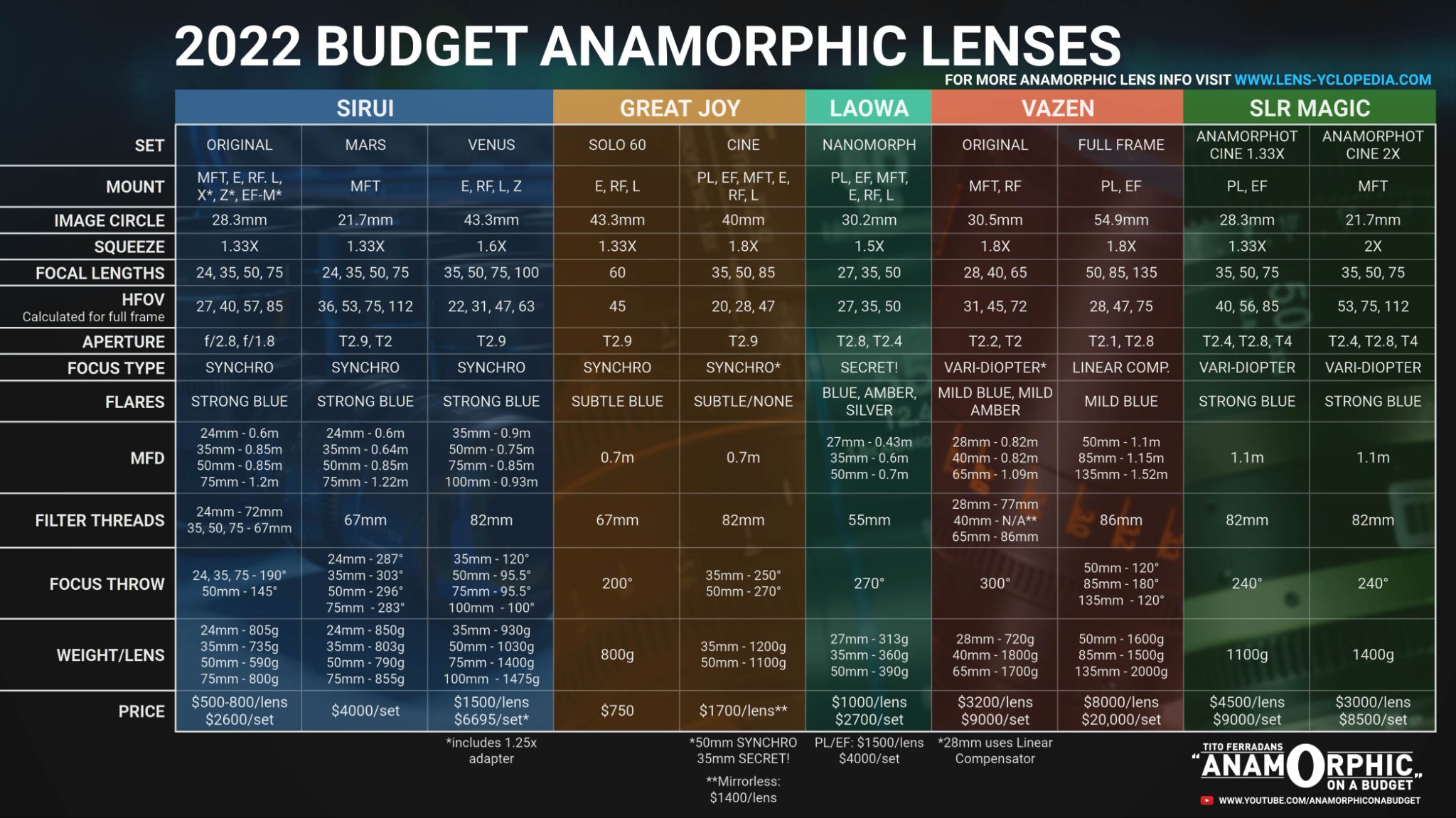
The following video covers the inception of low-budget anamorphic lenses and many of their personality traits. Below the video you’ll find a chart that organizes all of them in a way that you can easily compare them to one another and also includes some lenses not mentioned in the video.
SIRUI’S LENSES
With Sirui’s first set, they started at 1.33x because it turns a 16:9 sensor into 2.37:1, which is almost CinemaScope. So why would you need more squeeze? They also leaned heavily on flares. Sirui’s MARS set is super simple and reliable to use on MFT cameras. They deliver a level of simplicity I really missed from all the time I spent with adapters.
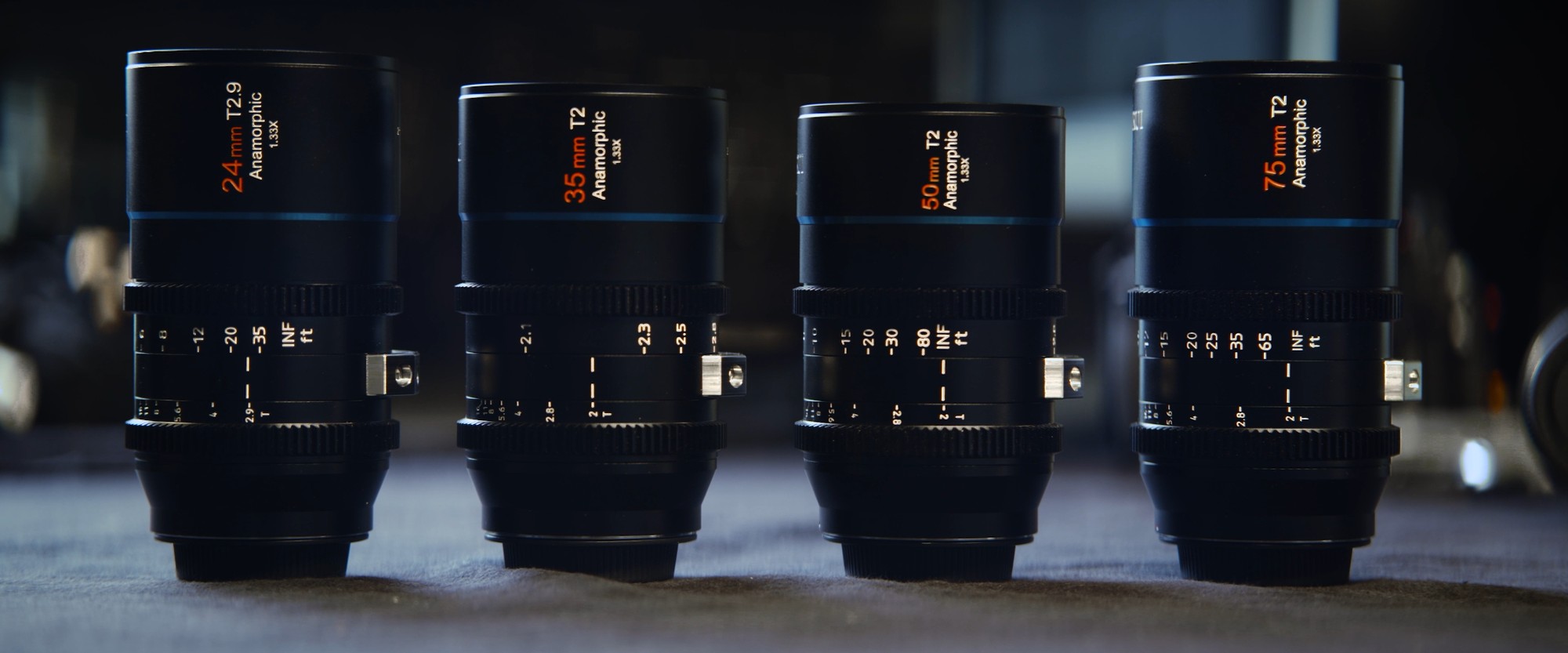
Then Sirui noticed 1.33x and APS-C still left a lot of market open, which pushed them into full frame offerings. They stuck with mirrorless options because it keeps costs and sizes down. These lenses feel too sharp for me, even on full frame and wide open, and they lean away from what I want in a “cheap yet classic anamorphic lens”. Sirui is trying, but going slowly and cashing in as much as they can in the process with crowdfunding campaigns and staggered product releases.
Sirui’s Venus full frame set might be the last stop for a lot of folks. They’re super affordable, deliver sharp results, have good (yet not great) minimum focus, and feature pronounced flares - many people love it, even though many others are vocal against the streaks! I feel it’s a very versatile set and if you just need to get stuff done quick and easy, this might be the one for you.
GREAT JOY TO BE HERE!
A lot of people love adapters because you can put those onto your own spherical bases, and that’s what Great Joy offered. Their 60mm initial lens is okay at best, but the combo with the adapter gives out really nice images. With Sirui’s move onto full frame, Great Joy pushed to one-up them by delivering a stronger squeeze factor (1.8x versus 1.6x on Sirui), plus the option of PL and EF mounts - which are not as “friendly” as one would expect from a “full frame EF lens” since you can’t put it on a focal reducer, or any camera that has a mirror.
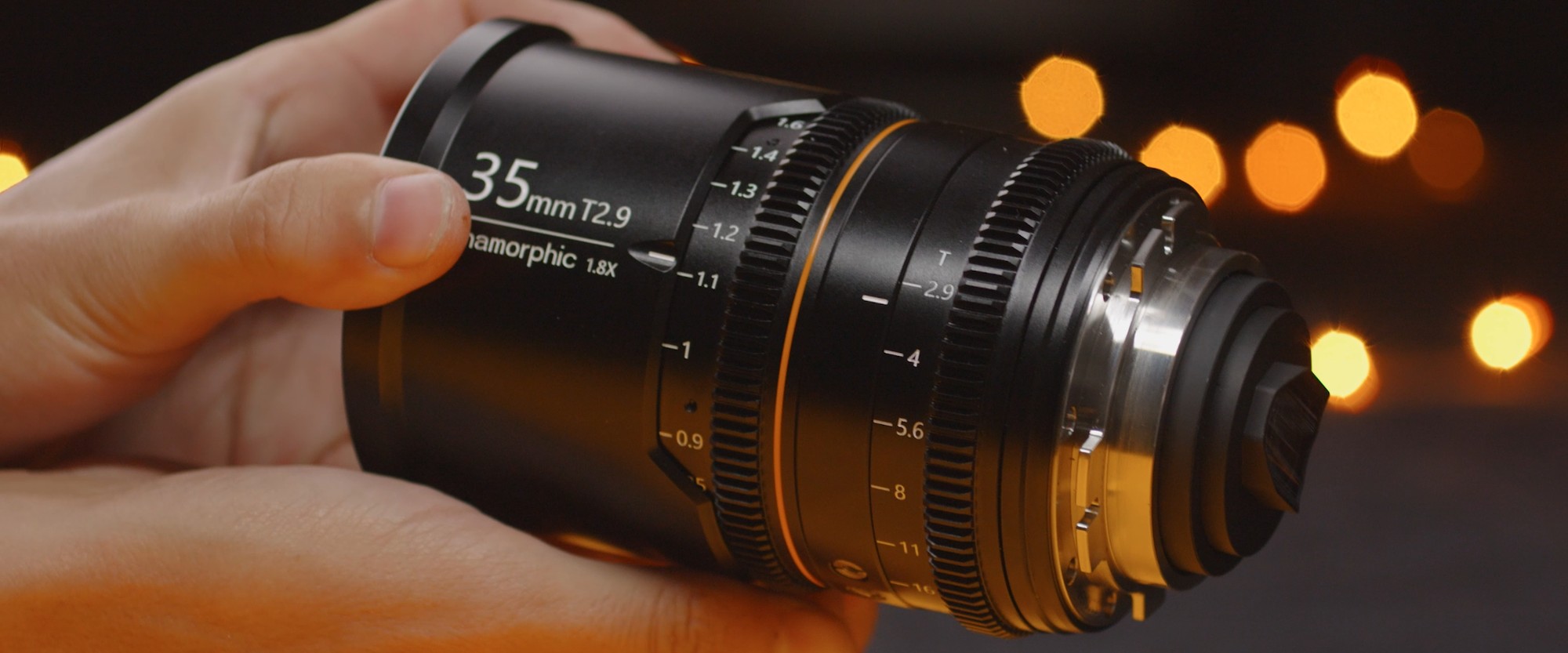
I feel they are the ones catering the most to the indie cinema world, with their choice of PL and EF mounts, as well as an established 1.8x squeeze that is ideal for 4:3 recording and 2.39:1 delivery. The lenses also have all the bells and whistles of cinema lenses, with geared rings and matching mechanics across the set. They’re really well put together and go for a price that aims to hurt Sirui’s hold on the market. I just find them a little too bland so far.
LAOWA NANOMORPHS
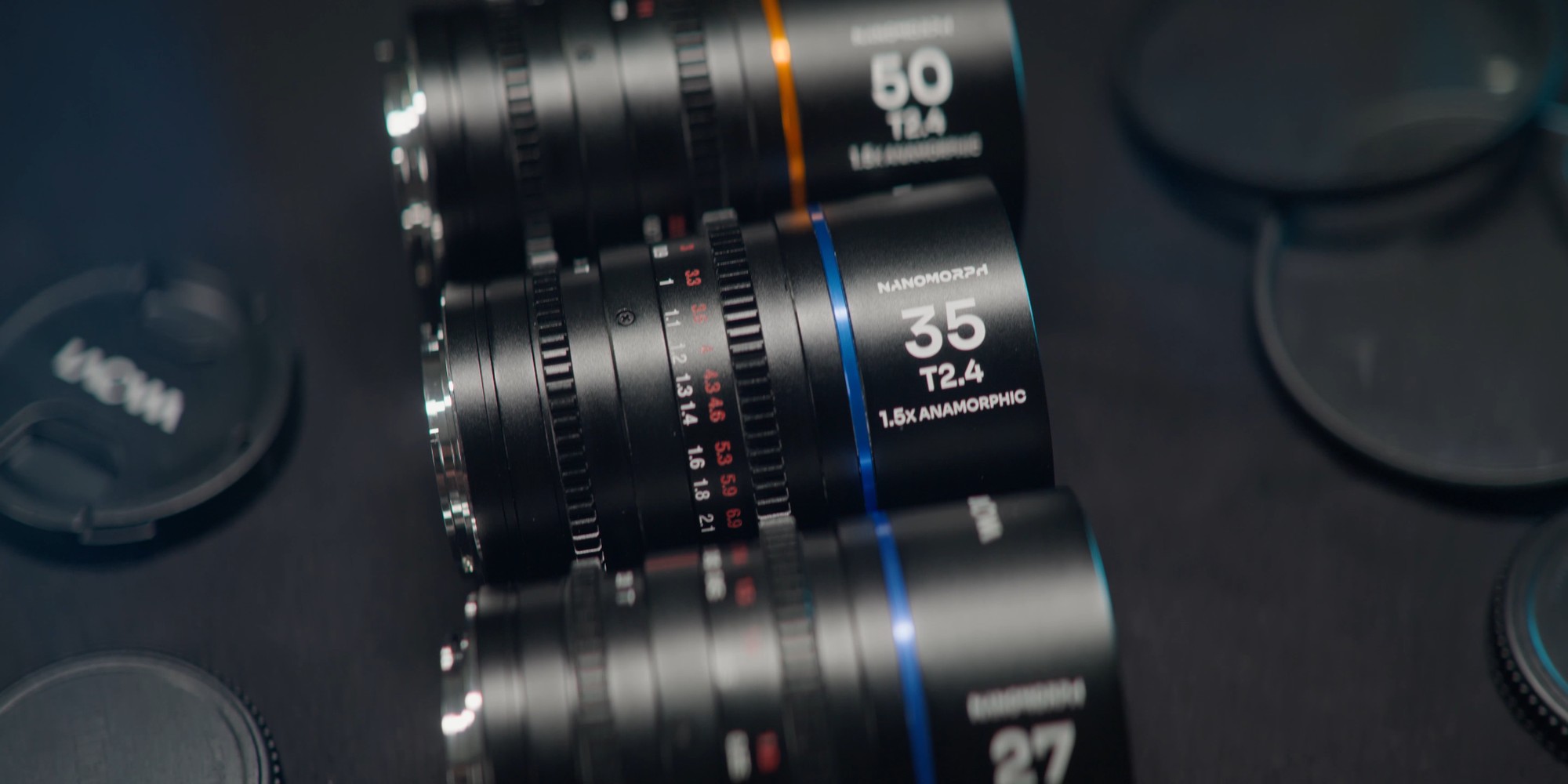
Last we got Laowa, who has an emphasis on small lenses. The Nanomorphs settled for APS-C from the start and came in with a wide variety of mounts. Laowa is more established in the market than both Sirui and Great Joy, and can afford to come up with multiple focal lengths and coatings all at once. I don’t love their flares but the concept of the set is brilliant. 1.5x squeeze in a tiny package is awesome for travel, gimbal, or even FPV. Anyone who wants to go under the radar or be unobtrusive on set is gonna lean towards these. The variety in flare color and mounts is also great, but I feel these are never gonna be as popular as Sirui’s full frame set.
DIFFERENT OTHER OPTIONS
We recently got the announcement of Atlas’ Mercury lenses, which are also designed for full frame sensors but put a lot more expertise into what makes up the “anamorphic look” besides squeeze numbers and bright flares (or lack of flares). One Mercury lens is still pricier than the whole Sirui full frame set, but the images coming from them are the most appealing to me these days - giving the type of look I want to achieve, and was closer to achieving while using adapters.
It has been a very interesting journey to play with adapters for several years, then experiment with a variety of new anamorphic lenses, all with different qualities and prices. At first I just wanted simplicity, as adapters are a pain to handle, but as I test more and more “clean” anamorphic lenses, I’m starting to finally figure out what I want in terms of “the look”, besides the simplicity of lenses versus adapters.