Anamorphic

Anamorphic Mumps Corrector - AE Preset

January 8, 2017

Here's an upgraded version for the anamorphic mumps correction tutorial I posted last year. Featuring a free AE preset that will let you apply the adjustment directly to video! I made this episode in collaboration with Lucas Pfaff.

USEFUL LINKS:

Place the Preset in the right folder!

WINDOWS: C:/Program Files/Adobe/After Effects /Support Files/Plug-ins or /Presets
OSX: Applications/Adobe After Effects /Plugins or /Presets

Creative Commons License
This work is licensed under a Creative Commons Attribution-ShareAlike 4.0 International License.
Anamorphic

Anamorphic Single Focus Solutions Shootout

January 1, 2017

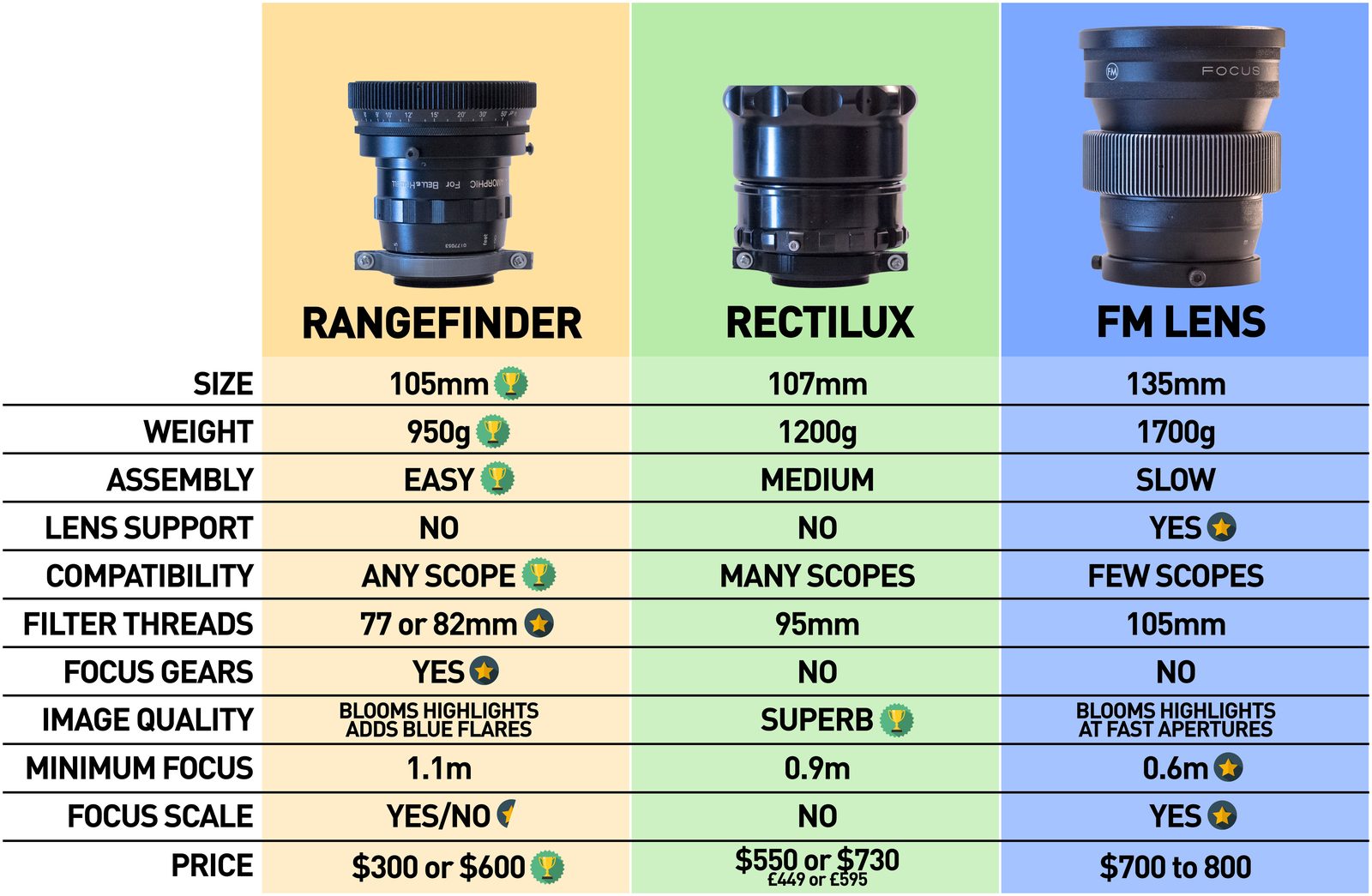
The ultimate comparison between anamorphic single Focus Solutions! Rectilux vs Rangefinder vs FM Lens. Which one is the best option? Watch the video and decide for yourself!

USEFUL LINKS:

Day-to-Day Anamorphic

How you can support Anamorphic on a Budget!

January 1, 2017

Hey friends! I'm here today for a different subject. The subject of "I want to keep making these videos", but I need your help.

I started this channel in July of 2015, with the goal of bringing more information to the subject of anamorphic lenses and adapters. The anamorphic look is attractive, but there are plenty of strange practices and myths when shooting with scopes. If you're new to the channel, I recommend going back through the archives: we're talking about over 70 videos; one every week, with a wide variety among tutorials and reviews plus free custom parts for download.

The challenge in making videos

In the beginning I said "I won't spend any money on this", and "I'll be using what I already have". I was wrong. I constantly invested in upgrades to make better videos. The amount I spent last year just to keep it running was almost $800 - for improved sound, webhosting, software and occasional gear rentals. I haven't gotten any of it back because all the content is available for free - and that's how I plan to keep it. I can't sustain these expenses, though and this is when Patreon comes in. Patreon is a platform where you can donate to content creators on a monthly basis.

Here's a detailed list of my expenses for 2016:

Rode Videomic Pro$160
Aputure Lav Mic$50
Dropbox Storage$85/year
Domain + Hosting$30/year
Adobe Creative Cloud$25/month (x12)
Contax Zeiss Rent**$65
Panasonic LA7200 Rent***$45 (x3)
Rapido Clamp$30
SLR Magic Customs*$45
TOTAL$900

* - When I got their package for the Anamorphots and Rangefinder reviews I had to pay customs on it.
** - I rented those for the Rectilux review before buying my own set.
*** - I rented the Panasonic three times: for its own review, for the +0.25 diopter test, and for the 1.33x shootout. Then I bought one.

Here's some data: the average video takes me between eight to twelve hours to complete. That is researching, writing, shooting everything (myself speaking, lensporn or tutorial steps, charts and world test), editing and wrapping. All of that competes with school and work. I put four videos up every month and the money I get from YouTube is enough to pay me a salary of $0.60/hour. I'm sure you wouldn't take a job with that description.

How you can help!

The goal is to increase the amount of material I put out and the overall quality of the videos and articles. By that I mean not only video, but also written posts and tools (like the quick guide on how to buy your first anamorphic lens and the Anamorphic Calculator. I started to develop the Anamorphic Cookbook months ago and that has barely moved because I can't afford to spend time on it!

The reward system in Patreon is super cool as I can detail what's the next step/upgrade to the project and I can have your input on what subject interests you the most. You should really check out the page to see how much I'm putting into it. In the past year I got plenty of messages and comments from you saying how much you appreciate the videos and that you'd like to offer some support. Here's your chance!

You can make a donation to this project through PayPal here. Any amount helps a great deal.

All money will go entirely towards this project. You can give also Join the channel on YouTube for some exclusive perks. If that's not your thing, you can still help by subscribing, liking and sharing the videos. Keep this in mind while watching 2017's first episode! I'm Tito Ferradans, and I'll see you next week.

Anamorphic Day-to-Day

2016 Anamorphic on a Budget In Numbers.

December 31, 2016

2016 was a big year for Anamorphic on a Budget. The project kicked off in mid 2015, but it was only in 2016 that it really picked up steam.

On youtube, we went from 300 subscribers at the end of 2015 to 2700 by the end of 2016. The playcount grew even more than that, jumping from 22 thousand in 2015 to 220 thousand in 2016!

The blog also saw a steep curve in visitor numbers, even though the articles weren't as numerous. In 2015 I had roughly 35 thousand visits for 140 published articles. 2016 more than doubled that, at 80 thousand views for 62 articles.

The most popular episodes were the hFOV Calculator and the Helios 44-2 Extreme Mod (Mk I, Mk II). These last ones featured on PetaPixel, DIYPhotography and a few other places. It was a first time for me!

Explosive Post of the Year goes to How I Fell For a LOMO Anamorphic Scam. Reeling 800 hits the day it went up, it performed three times better than a regular post. This boost in performance is also dangerous as it motivates me to take bolder moves and act carelessly just so I have a good story to tell (don't worry, I keep choosing the safe approach).

It was an year of collaborations. I had posts based on knowledge and gear shared by many people! In that list: Matt Leaf, Cosimo Murgolo, James Price, Chris Bold, Amir Safari, Alan Besedin, Brian Caldwell, Richard Gale, Rob Bannister, Fernão Morato, Bruno Nicko, João Gabriel Rodrigues, John Barlow, Andrew Chan at SLR Magic and Bohus Blahut at Fotodiox. I didn't realize this list was so long until now. If you have any cool ideas that would make a good video, get in touch!

I already have lots of things in store for 2017, so stick around, subscribe and let's go for more anamorphic!

Thank you for being a part of it,
Tito Ferradans

Anamorphic Day-to-Day

Anamorfake Mir 1B: Extreme Mod Tutorial

December 25, 2016

Here are the steps for the anamorfake Mir 1B. This is an extreme mod tutorial and it ties the loose ends of this year's tutorials. There are lots of steps!

USEFUL LINKS:

Anamorphic

Anamorfake Jupiter 9: Extreme Mod Tutorial

December 18, 2016

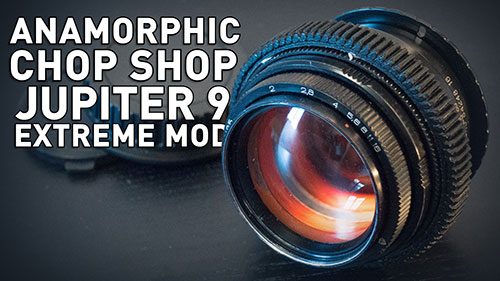
Here's how to anamorfake the Jupiter 9 with an extreme mod. This is a wonderful mid-telephoto, 85mm. It's a long tutorial, so get ready.

USEFUL LINKS:

Day-to-Day

From childhood to adulthood: A coming-of-age reading of <em>It Follows</em>.

December 15, 2016

It Follows, directed by David Robert Mitchell, premiered in 2014 at the Cannes Film Festival. The movie achieved great critical acclaim as one of the best horror movies of late and has grown a large following among the cult audience. In what is considered his first feature film, Mitchell pays tribute to many classic horrors - Halloween, Night of the Living Dead, The Ring, Nightmare on Elm Street among others -, using the genre's conventions on his favor to subvert the audience's expectations. His ability to do so is what makes It Follows so memorable. The movie tells the story of Jay (Maika Monroe), a 19-year-old girl who ends up infected with a dreadful curse after having sex with her date Hugh (Jake Weary). Jay is then haunted by an entity that only cursed people are able to see. The creature is represented through the most terrifying and cliché behavior of horror movie villains: it never stops and it always walks straight towards its victim. What sets It Follows apart from other horror movies is its underlying symbolism. While today’s horrors are usually built around a predictable plot interwoven with jump-scares and gore visuals, Mitchell's film has its own pace and themes. It Follows is a coming-of-age tale that happens to be told through the scope of the horror genre. Some of the most noticeable themes introduced by the movie as part of adult life are the constant presence of sex, the danger of STDs, the absence of parental figures as protectors and guides, and the bond of friendship that acquires a new meaning in adulthood. Mitchell uses the subtext to talk about loss of innocence, insecurity about one's own body, and realization that all life inevitably ends.

On the most superficial level, having a curse that is passed through sex is a clear link to the dangers of STDs. STDs are a risk of an active sexual life - a strong indicator of transition into adulthood. As Mitchell explains in an interview to Rich Juzwiak, at the Hollywood news website Defamer, Jay is not a virgin when she has sex with Jeff, in addition, the way the characters discuss the subject of sex in the movie is loaded with meanings other than casual. Sex is a very big deal and at times it is their only way to survive. On the other hand, it exposes them, making them feel vulnerable and uncomfortable. One of the scenes that portrays these elements is when Jay is in her bathroom. She spends the longest time looking at herself in the mirror - this is the second time she shows concern about her looks. After staring at the mirror she peeks into her underwear, inspecting as if something is wrong down there after Jeff tells her about the demon. In this scene we have one of the few jump-scares in the movie as a red ball hits the window. Jay is startled, but then resumes her inspection. The camera is then moved to the outside of the house showing a young boy peeping through the window. This is the same boy that spies on her while she is in the pool, at the beginning of the movie. His gaze is much different than the longer looks given by Paul and Greg, putting the camera in their point of view. The difference in perspective of how a child sees an opposite-sex body and how an adult sees it is reinforced twice when erotic magazines are brought into the subject. One of them is while Paul and Jay reminisce about the time they found a pile of such magazines in an alley and spread them out in the front yard, not understanding the meaning of the photographs. The second time is while they visit Jeff’s makeshift home, where all he left behind are the magazines and used tissues. Paul is skipping through one of the magazines, paying close attention to the photographs.

An important element of adulthood is the replacement of parental figures and their guidance with friendships where they help each other. This is presented through the utter absence of the characters’ parents in their life-or-death drama. Jay and Kelly’s mother appears a couple of times, but never has any meaningful conversation with any of them. Jay actively refuses to call her mother for help in one of her encounters with the creature. Building on top of that, the shape that the creature takes when it kills Greg is his own mother - and it rapes him to death -, and the one that comes closest to killing Jay is her father. It Follows illustrates the transition from childhood to adulthood as a rupture with parental figures. They can even become dangerous, given the circumstances. To overcome that, Jay, Kelly, Yara, Paul and Greg bond together, putting their lives at risk to protect one another in any way they can. This protection is still maturing as depicted in their final fight with the demon. Mitchell says the plan they came up with to kill the creature “[is] a kid-movie plan, it’s something that Scooby-Doo and the gang might think of, and that was sort of the point . . . Ultimately, [they] have to resort to some way of fighting it that’s accessible to [them] in the physical world, and that’s not really going to cut it.” (Buchanan). That is another thing about being an adult: sometimes there is no solution for the problem at hand. As Yara reads from The Idiot: "if one is faced with inevitable destruction, . . . one must feel a great longing to sit down, close one's eyes and wait, come what may" (Dostyevsky 128), which is exactly what they face. Opposed to Dostoyevsky’s words, Jay never gives up. She always fights, runs and claws for her life.

The certainty of death is the core theme of It Follows’ coming-of-age story. At the end of the movie, Yara reads another passage from The Idiot that synthesizes this idea: “physical agony and all this distracts the mind from mental suffering so that one is tormented by the wounds until the moment of death. And the most terrible agony may not be in the wounds themselves but in knowing for certain that . . . your soul will leave your body and you will no longer be a person. And that this is certain, the worst thing is that this is certain” (Dostoyevsky 43). A demon that will always walk towards its victim and never gives up is not even subtle enough to be called a metaphor. Being an adult means accepting death and pushing forward. In various moments of the movie the characters talk about childhood memories and places that acquired different meanings as they grew up. Jay, Kelly, Paul, Yara and Greg are not old, but they are all well aware their childhood days are gone. "I mean, how cool would that be, to have your whole life ahead of you?", Jeff says picking a young boy as someone he would like to trade places with. He goes on to number a series of advantages of being a kid. Jay remarks that he is not old, only 21. Later that same night, Jay rambles about what she expected from growing up, when she was a child, and all the amazing experiences she would have, she would finally feel free. In the end, after Jay has sex with Paul - the only guy in the movie that is emotionally invested in being with her - they work out a plan so they can live their lives. In the last shots, they go out together and face the possibility death without panicking as they have for the previous days. Death is still walking towards them in the very last shot.

The numerous bodies of water set a starting point for Jay. They depict safety, or in a more abstract fashion, the mother’s womb, representing protection for her offspring. In the first sequence at the pool, Jay is completely peaceful and safe. The group of friends seeks refuge at Greg’s beach house, Jay swims towards a boat in order to pass the demon along. After that, the pool in her backyard is broken, dry. She has been expelled from safety, from her childhood sanctuary and there is no going back. The confirmation of that is the final battle against the demon at the community pool, where the waters fail to keep her safe, almost drowning her as the demon - assuming the shape of her father - grabs her foot. The creature is then gunned down and the strongest shot in the movie shows up: the entire pool becomes red with blood, which could represent the loss of virginity or a girl’s first period, both meaningful rituals of becoming an adult. After their escape, Paul and Jay have sex, in the only rainy scene of the movie, as if the water that first acted as protection now symbolizes a blessing to their relationship. Their dialogue after the act is loaded with multiple meanings, as the first line is a big cliché for loss-of-virginity sex. “Do you feel any different?”, Paul asks. Jay shakes her head negatively. “Do you?”, she asks back. “No.”. Yet they are all very different now.

WORKS CITED

Buchanan, Kyle. "It Follows Spoiler Bomb: The Director Explains All Those Twists and Shocks". Vulture. 27 Mar 2015. Web. 19 Nov 2016

Dostoyevsky, Fyodor. The Idiot. Auckland, NZ: The Floating Press, 1915. ProQuest ebrary. Web. 20 Nov 2016.

It Follows. Dir. David Robert Mitchell. Northern Lights, Animal Kingdom, and Two Flints. 2014. Film.

Juzwiak, Rich. "A Conversation About It Follows, 2015's First Must-See Horror Movie". Defamer. 13 Mar 2015. Web. 20 Nov 2016