Anamorphic

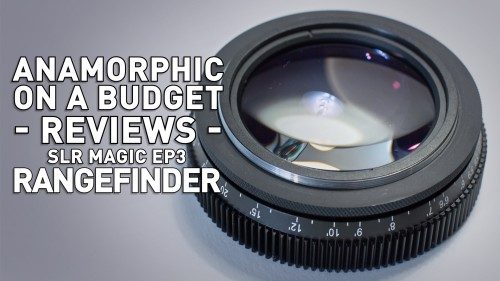
Anamorphic on a Budget - SLR Magic Ep 03 - Rangefinder

December 20, 2015

Third episode of this series, now it's the Rangefinder's time to be carefully analyzed. Paired with the Kowa B&H anamorphic adapter, the Rangefinder turns this amazing double focus lens into single focus. I had a blast running around and shooting without worrying about constantly checking focus.

USEFUL LINKS:

All the RED links on this post are part of eBay's Partner Network, so if you purchase anything through them, you're helping me to keep this project going.

You can support this project on Patreon. Make your contribution and help the Anamorphic Cookbook!
Day-to-Day

Community (2009-2015)

December 16, 2015

I just finished watching the (possibly, maybe?) very last episode of Community, "Emotional Consequences of Broadcast Television", and for a comedy show, it made me cry from start to finish. Let's go back in time for a little bit.

Community is a weird show. Weird in the best possible way. Created by Dan Harmon, the pilot episode introduces us to Jeff Winger, a lawyer caught with a fake diploma so, in order to get back to his work, he needs a real diploma and the easiest way is attending to Greendale Community College. There we're introduced to Abed, Britta, Troy, Shirley, Annie and Pierce. Later on Jim Chang and Dean Pelton also become key characters, but that happens because their importance in the show grows along seasons. Critically acclaimed and with a huge fan base, it sounds almost absurd that the show faced cancellation at the end of almost every season (but the first two). Community's humor revolves around being self-aware and tons of meta jokes, it's a show where jokes are planted across several different episodes and seasons (such as the numerous times they hum or play daybreak and then the Dean comments on it in one of the last episodes as he enters an elevator), but at the same time, you can watch any episode independently and not feel lost. Season two is particularly brilliant, with different styles/genres for nearly all episodes (copied from other shows and movies), and some of the show's best jokes, so if you want an incentive to start watching, pick anything in season two, and that extends into season three.

Besides almost being canceled every other season, Community faced an uncommon issue for tv shows, which is the fact that almost half of the original main cast left the show - for various reasons - along the time and even the showrunner was fired during season four - and he constantly jokes about this season in the show. During season two, Abed - which is the most fourth-wall aware character of all - creates the hashtag #sixseasonsandamovie and that has literally guided the fans to push for the show to stay alive when it started to face trouble with audience numbers in season three - Community is so aware of its uncertain future that the ending for episode 14 in that season is Troy and Abed enacting a charity drive to save Greendale. We thought it would end there, but it didn't. Then we thought it would end by the end of the fourth season, with Pierce's departure, but no, we got Dan Harmon back just to find out Troy would be jumping the ship next, before the middle of season five. Shirley also leaves by the end of season five and NBC confirms it won't renew the show for the sixth season. That's when Yahoo picks it up and fulfills the promise of six seasons, through the roughest of roads.

Season six was overall strange. Very different yet too familiar. I didn't crave for next week's episode and ended up not watching the last five episodes until today. They were here, sitting in my hard drive ever since they came out (the last one aired in June 2nd) so I thought "you know what? I could use that space" and decided to watch them so I could get rid of the files. The first three were kind of ok, the fourth was weird in a way that I couldn't make up my mind if it was good or bad or just plain weird - and that made me think about it, about its message and the way it was delivered and how that didn't sound like Community, but at the same time was extremely true to its nature, which is not common with TV, so I decided it was a good one - and then we got to the very last episode in which I cried for 25 of the 27 running minutes. I didn't cry out of sadness and desperation, plus I also laughed while crying and that too is not a common thing overall. I cried because it connects with many many things in my life right now.

When I started to watch Community, it was in the break between seasons two and three. May started it at home, and then she rewatched the first few episodes with me and we were hooked. We did watch a ton of tv shows during the years, yes, but if I were to rank the most important ones, the ones we deeply cared about the characters, the ones we went online to find out more information, it would be Community and Breaking Bad. We wouldn't watch them without each other. And we never minded watching repeated episodes - so many favorites! - to the point of knowing several lines. We turned off our phones and woke up in the middle of the night to watch Breaking Bad's finale just so no one would spoil it for us in the morning. We have clothes from Community. It's a show that followed May and I around since almost our beginning and one we rooted for during its crises, one we constantly reference in random moments or conversations and, lastly, one that makes me think of her every time I watch an episode. Watching the ending of it was very close to what we talked in our last conversation as a couple. It was good, it was great - amazing, actually - but it was also time to let go. The same way the characters pitch absurd solutions that obviously wouldn't work for "season seven", we had our own crazy attempts of keeping us going and, just like Jeff, realized it wasn't gonna do us any good.

In the last two episodes the characters start to raise the subject that one is different from itself when it's part of a group and each member of the group is as part of them as they are part of the others. Confusing, I know, but they realize how much better (or worse, for Chang!) they are when they act as individuals instead of part of the study group. This whole argument was also extremely in sync with plenty of our latest conversations, how each of us had a separate life from the other and that that wasn't a bad thing. We may not be girlfriend and boyfriend anymore but the connection we share is not going away, ever. Quoting Abed's words from the last bits of season six's last episode: "(...) It’s a friend you’ve known so well, and for so long you just let it be with you, and it needs to be okay for it to have a bad day or phone in a day, and it needs to be okay for it to get on a boat with Levar Burton and never come back. Because eventually, it all will".

Day-to-Day

Be More Daring.

December 14, 2015

I think I mentioned I'm working on a number of different projects at the same time recently and that involves getting feedback from different people regarding how they feel about the way the idea develops. Yesterday I got out of a call with the goal of "being more shocking, more creative, this is looking too simple, doesn't look like you". Today I heard almost the exact same thing, regarding a similar project (on a much smaller scale, though), from a different person. "Be more daring. Less predictable, like everything you do". Well, crap.

In the past I've worked on some pretty crazy projects with both people. They turned out to be awesome in the end, but I was in a different stage of my life and being digitally careless had no serious consequence other than multiplying the amount of time in front of the screen fixing all the stupid mistakes and non-organized animation. I look back and see things that I could easily fix or improve today, and that's fine, I guess this is how it should be in an artist's career. The point now is that being reckless with creative work drove me down some crappy roads recently. Let's rephrase that, being reckless with several aspects of my life got me in so much trouble this past year that after things started to improve and I felt I was getting better, I started to be careful. During this "recovery phase" - as I feel it - I decided (not consciously) to play safe. Play safe with work, play safe with food, with people and friends, play safe with my plans or even with my bike rides, and that's precisely from where I should be learning.

What? How would you learn anything from playing safe with bike rides? Of course I don't want to die on the road, so I play safe, but sometimes the bike doesn't like the idea, or the road, and I have to either strengthen my grip through the wreck and do my best not to fall or deal with the consequences. To illustrate the matter: I've fallen twice recently. The first time, the road was frozen and the tires lost grip, so I fell. The second time I went over an obstacle that was a little too tall and that sent me flying in one direction and the bike in another. I'm ALWAYS afraid of falling, even before these two occasions, but hitting the ground was much less scary in real life compared to what I had imagined.

It means I'm very likely playing safe because the possible outcomes for taking risks are way too worrisome. Following this train of thought I should take the damn risks and deal with whatever comes afterwards because even if it turns out bad, it won't be as bad as I think. Of course, I can be mistaken about my own internal motivation and the reason I'm playing safe is because I wanna do more things, different things, and taking risks on every single one of them isn't creative, it's just stupid. I know I'll hit walls once in a while, roll on the ground, get a few bruises here and there, scratches, but nothing is likely to kill me or crush my dreams in a very definitive manner.

The main problem is saying is way easier than actually doing it. I'm wired to take the safest route recently and willingly drive towards risks and challenges doesn't come naturally. I'll try taking the hands off the wheel for a while and see where that leads me.

Anamorphic

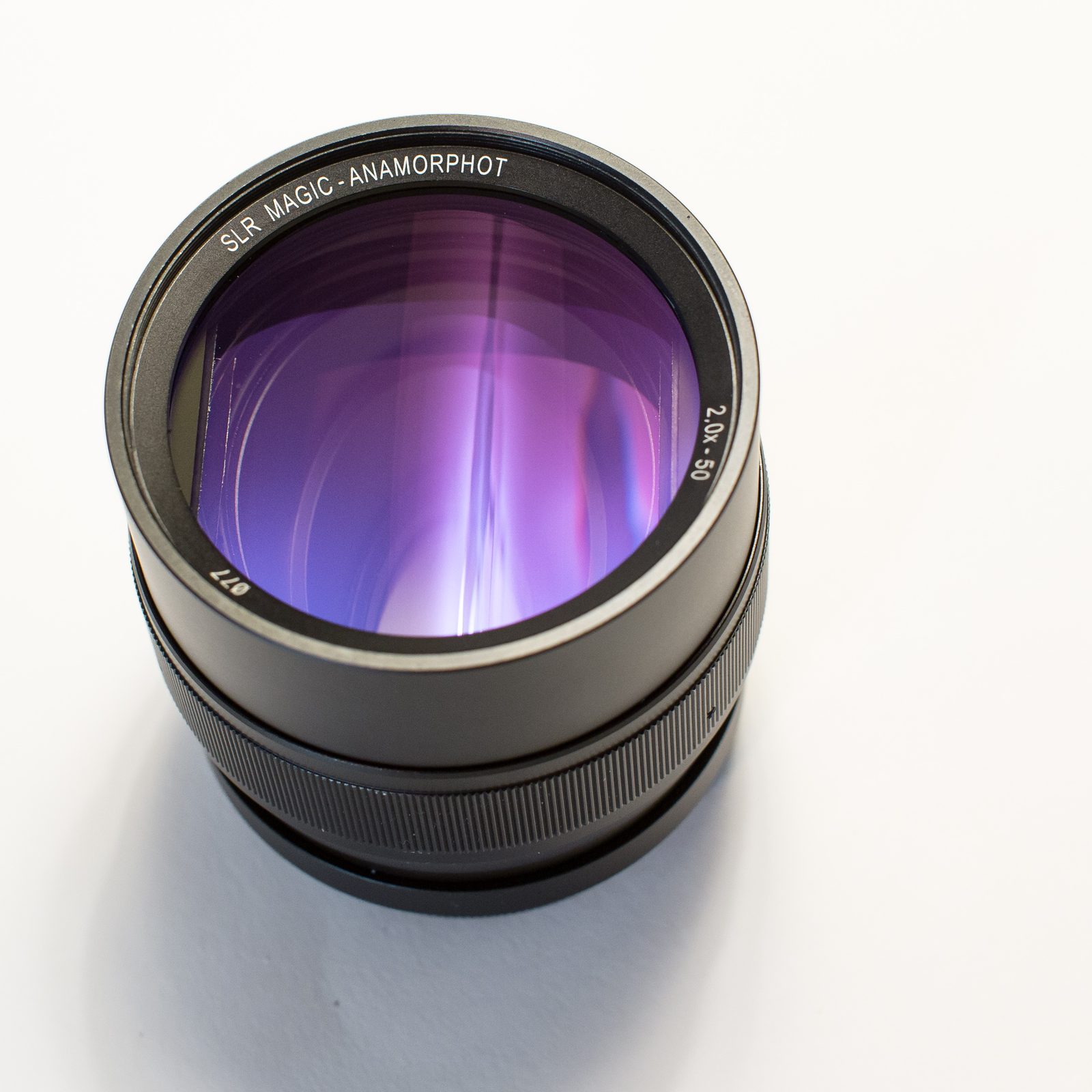
Anamorphic on a Budget - SLR Magic Ep 02 - Anamorphot 2.0x-50

December 13, 2015

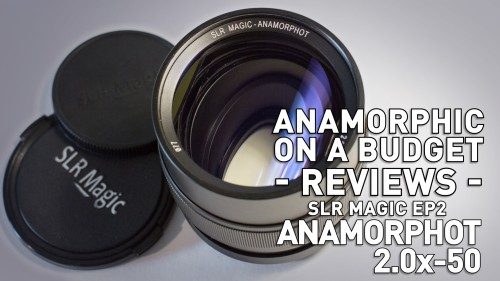
The second episode of the SLR Magic series goes over the bigger and heavier Anamorphot 2.0x-50, closer to a double focus system, it doesn't perform so well at fast apertures, which let me down a bit. The Rangefinder turns it into a much better lens, so keep an eye for next week's video!

USEFUL LINKS:

All the RED links on this post are part of eBay's Partner Network, so if you purchase anything through them, you're helping me to keep this project going.

You can support this project on Patreon. Make your contribution and help the Anamorphic Cookbook!
Anamorphic

The Anamorphic Cookbook - Draft.

December 11, 2015

I was drawing my plans for next year and started to think a good (better?) Anamorphic Guide might be something interesting to work on. EOSHD's guide is barely ok and now that I look at my own guide, it has its flaws plus there's a ton of things I learned AFTER writing it that could benefit future readers. Also, the game has changed with the arrival of FM, Rangefinder and Rectilux, totally warping whatever was the standard for double focus and projection lenses. We have more options to choose from instead of using adapters all the way, SLR Magic is making their anamorphic lenses, DSO is coming up with the Olivia, John is always a little box of surprises and so on. 2016 might be the year when Iscoramas officially lose their throne.

So I was thinking of starting such enterprise. I have a rough idea of most chapters and you can see the list at the bottom of this post, but if I'm working on my non-existent budget, this can take a while or not happen at all. Some friends suggested me to start reviewing other kinds of gear so I can get sponsors for the Youtube channel but, you know, I'm not that much into other gear! HAHAHA! These lenses are my thing and if you guys can help me stick to it I will continue to deliver good and new content on a constant basis.

Here's a brief story of my life so you understand what I mean when I say I have a non-existent budget for this. I'm a film school graduate from Brazil - University of São Paulo -, and the Anamorphic on a Budget guide was my graduation work because I fell in love with the lenses and had the hardest time finding information about them online. Information in Portuguese was NONE, people literally didn't know what anamorphics were. After that I moved to Vancouver, Canada, where I still am and went through Vancouver Film School's 3D Animation and VFX program. During this year I got depressed and lost 25 pounds - you can see me getting them back through the first reviews - but being here motivated me to translate the guide to English. I also met a LOT more people interested in anamorphics compared to what I had in Brazil, and started to make the videos, which also taught me plenty new things - about the lenses, about having an eye for image quality, about talking to a camera (that was one of the hardest parts) and about what interests the audience. Now I'm starting a Creative Writing program at Langara College and will freelance with camera work and VFX to pay for school and get food on the table. I still have money coming from Brazil, but the conversion rate is almost 3:1, so it's more of a last resort.

Back to the book, I was thinking of two very different paths. Path number one would be Kickstarter for this project alone which is a one-time thing. Be a backer and get a digital copy plus version updates, whenever they're available. The second path is Patreon, and it entails a monthly payment for anyone who'd like to support my research and weekly videos since I've already spent some money on them (larger Dropbox account for the original RAW chart files, clearing customs for the SLR Magic gear, Rapido clamps, a ton of step rings that were only used once, a larger bandwidth plan for the website due to increased traffic, renting lenses once or twice, replacing my tripod that snapped in half and that kind of thing) and having a better budget will allow me to dedicate more time and put more effort into the project, pushing for more than one post per week, going into subjects other than lens reviews such as "WHY SHOOT ANAMORPHIC?", or how the lenses work, how diopters work, more test shots and experiments, you get the idea. Plus, supporters will be able to provide input about what they want to see reviewed next, first chance to buy whatever gear I decide to sell - yes, this will be happening, there's no need for me to have 30+ lenses while attending to Writing school - and some other cool stuff (like oval apertures, custom t-shirts and whatever I can come up with). The point is neither the channel nor the blog will be paid and there will be a free content anyway. The goal is to increase the amount and quality of content!

Later on, if the book succeeds, I'm considering a fancy printed version, since it will look and feel awesome, but I need to get the content going first!

Rough chapter list and what they will include initially. Very likely to be expanded.

Introduction
- Origins
- Hollywood (failed attempts / it's a hit!)
- What is the "cinematic look" (flares, bokeh, artifacts, aspect ratio)
- Recent/Famous uses and extra material (True Detective, Total Recall, Interviews, Bordwell, etc)
- Fetish vs Storytelling (flare and bokeh for themselves vs using these elements to strengthen a story)

Anamorphic Storytelling
- Wider frame composition
- Negative space
- Cinematic experience (inherited epicness)
- more in this chapter. needs research and not of the technical kind.

Lenses vs Adapters/Attachments
(LOTS of individual lenses info in this part, I plan on renting a few cine lenses for tests and all, plus all I've gathered from the published and unpublished reviews).
- Renting vs owning gear
- Cine lenses
- Adapters (1.33x, 1.5x, 2x, odd values such as 1.75x, 1.9x, 1.42x)
- Taking lenses and their effects on the anamorphic (russians, Zeiss, Canon L, zooms vs primes, light loss, why is the helios 44 so amazing? taking lens sets)

Diopters and Achromats
- Visual differences (benefits from using diopters, added shaprness)
- How diopters "affect" stretch and bokeh for the better ("the diopter look")
- Single Focus Solutions (or Variable Strength Diopters): how do they work? FM, Rectilux, Rangefinder comparisons.

Anamorfake
- Cinemorph filter (both the front one and the Sigma version)
- How to make a flare filter
- Modding the Helios 44, Pentacon 29, 135mm, etc (aperture mods)
- DSO lenses (vs MotionSix, etc)
- Faking in post (crop, wide angle distortion, optical flares)

Gear
- Cameras (GH4, 5D3, 50D, BMPCC, Ursa, RED...)
- Monitors and EVFs with anamorphic desqueeze

Post
- Destretching (AE, Premiere, FCP, Nuke, Photoshop)
- Dealing with mumps (irregular stretch along the frame)
- Corner Pin (to fix mild misalignment)
- Tracking and compositing (VFX post)

Day-to-Day

Creative Camera Rentals.

December 8, 2015

I mentioned it a few times in the videos and reviews, but didn't get to make an official post about the subject, so here it goes.

A few months ago me and my friend Rob Bannister partnered up combining our arsenal of unusual gear (my anamorphics, russian primes and zeiss set, his anamorphics, Dog Schidt Optiks and Kinemini, plus a lot of smaller gear from the both of us) into this gear-renting enterprised named Creative Camera Rentals. Our goal is to reach the people who got bored of shooting Canon L or super clean and sharp and clinical footage and want to add some character that can only be achieved optically. Add that uniqueness to the look of your project, that Hollywood touch without the Hollywood budget.

I reckon this might interest quite a bunch of film students and independent filmmakers out there as I was interested myself and would've loved to find a rental place like this while I went through film school. We're running a small operation, just the two of us, our offices are our homes and we haven't started advertising anything yet except a few posts on facebook, close friends and the random people that talk to us on the streets with curious looks about the weirdness of the gear in our hands.

So like us on Facebook, share it with friends that might be into this kind of crazy and drop a line if you're interested or curious about anything!

Anamorphic

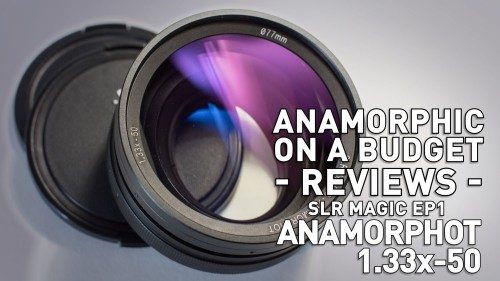
Anamorphic on a Budget - SLR Magic Ep 01 - Anamorphot 1.33x-50

December 6, 2015

First episode of the SLR Magic series, starting with their debut anamorphic adapter, the 1.33x-50, I really enjoyed having this lens around and going out to shoot with it. I even went beyond the standard tests and shots just to get to know it better. If I didn't have too many Centuries, I'd certainly get one of these.

USEFUL LINKS:

All the RED links on this post are part of eBay's Partner Network, so if you purchase anything through them, you're helping me to keep this project going.

You can support this project on Patreon. Make your contribution and help the Anamorphic Cookbook!