Anamorphic

Anamorfake It Until You Make It!

November 13, 2019

I’ve seen the effects of my research while watching anamorphic adapters on eBay. Prices have been consistently going up since 2014 and good adapters are increasingly harder to find. This made me sad because the whole point of the Anamorphic on a Budget project was to achieve the anamorphic look without breaking the bank. Then adapters became expensive and the look was locked away from those without as many resources. That left me wondering if there was another way to craft the anamorphic look.

GET THE GUIDE NOW!

So I spun the process on its head and started looking at the final image. I wanted to reverse engineer the look as if I never knew anamorphics existed. What other tools had I at my reach that could put me on the right track? Over the last two years I combined various techniques to craft the anamorphic look. I did it in a way no one could tell if the footage is really anamorphic or not. As I went down this path I came to the conclusion that most anamorphic adapters are overrated - in price and performance.

Then I compiled all the data into a guide that is close to two hundred pages long. Almost half of those go into detail on lens modding tutorials. Post-production techniques, mods that don’t require opening lenses and related products such as streak filters and plugins fill the other half of the guide.

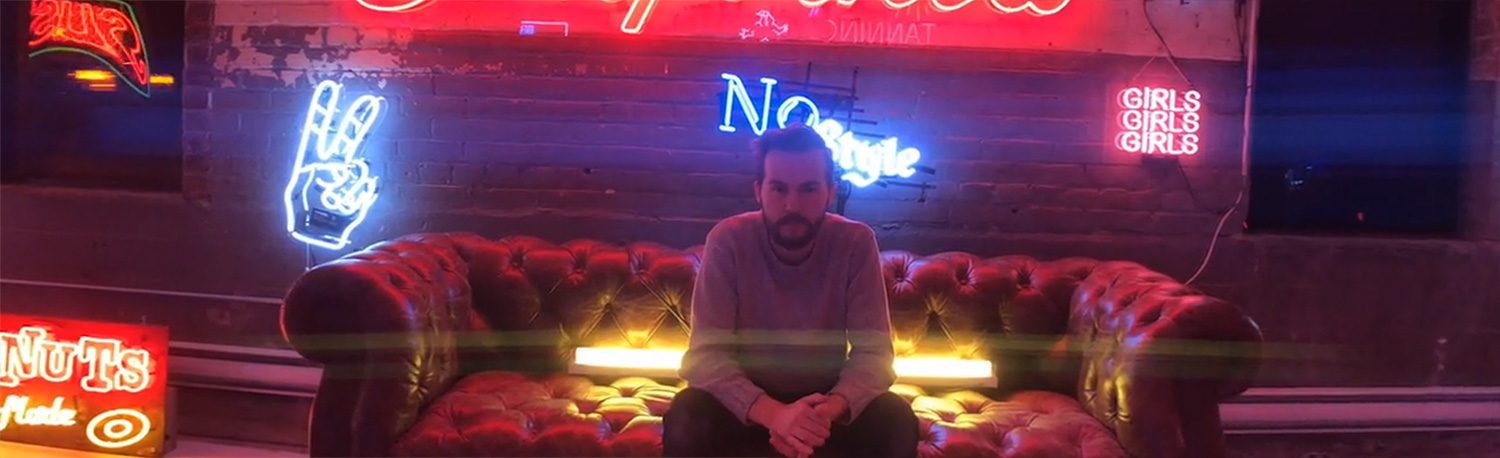
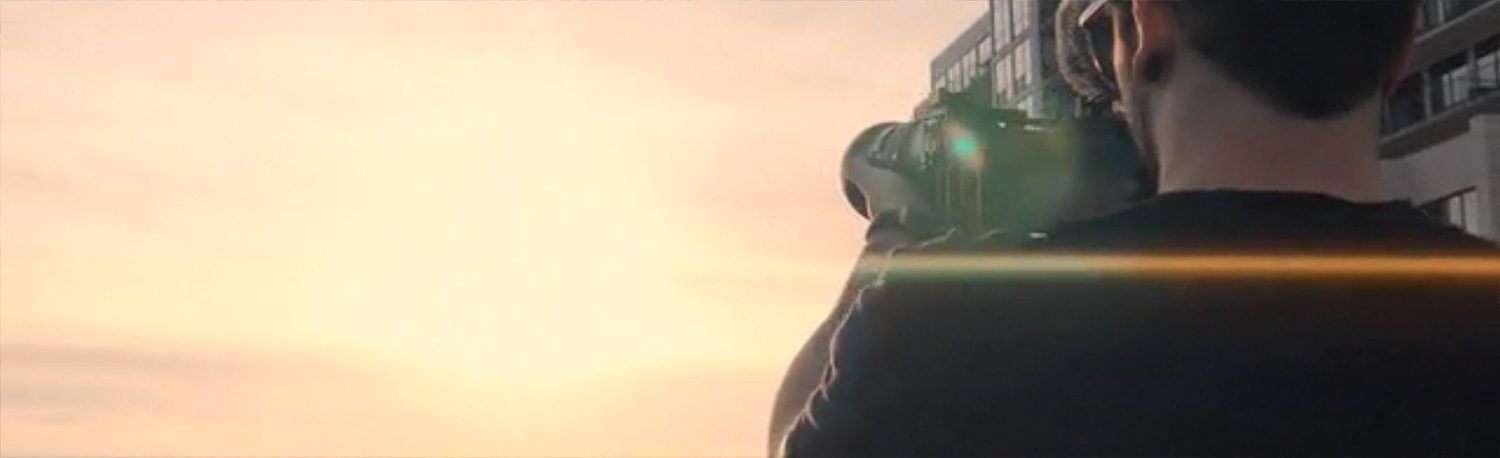
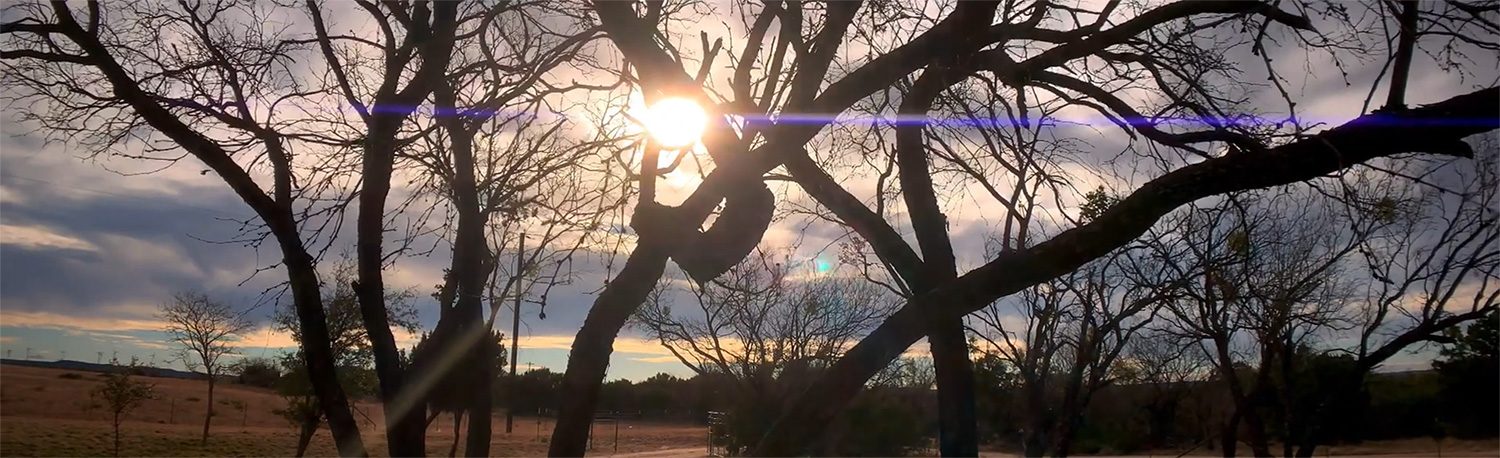
To prove the point that it’s nearly impossible to tell anamorphic apart from anamorfake I made a little quiz. I'm using my own footage and shots from a few friends. I figured it would be a fun way to reveal not even seasoned shooters can get the shots right.

Can you tell anamorfake shots apart from real anamorphic ones?

I'm betting you can't. I'm so confident in my prediction that I'm giving a 15% discount code for the "Anamorfake It Until You Make It" guide in the off chance you get all ten images right! Click the "NEXT" button below to start.
Anamorphic

Is there an ideal sensor size for anamorphic shooting?

August 19, 2019

There are lots of misconceptions about sensor size and anamorphic shooting. I believe this started with the Panasonic GH4, but let me first explain the issue. Every other day I get messages from people “informing” me they can’t use 2x lenses because their camera does not have an anamorphic mode.

They say they’re limited to 1.33x or 1.5x lenses and they don’t know what to choose. Some are even more hardcore and ask for camera recommendations. You guys need to calm down. I’ve been shooting anamorphic on my Sony A7s2 for three years now and it never gave me trouble. The A7s2 does not have an anamorphic mode. I recently got a Panasonic GH5 which features an anamorphic mode.

The BMPCC 6K pushed anamorphic modes into Blackmagic’s cheaper models - such modes were previously reserved for the URSA lineup. Anticipating an increase in questions on this subject, I wrote this post!

What is anamorphic mode, and why is it good to have it?

Anamorphic lenses squeeze more field of view onto the sensor. There’s a lot more to them, but this is the aspect we’re dealing with now. Let’s say the ideal anamorphic lens has a 2x squeeze, which means that you have to double the width of your footage in post production for your shot to look correct.

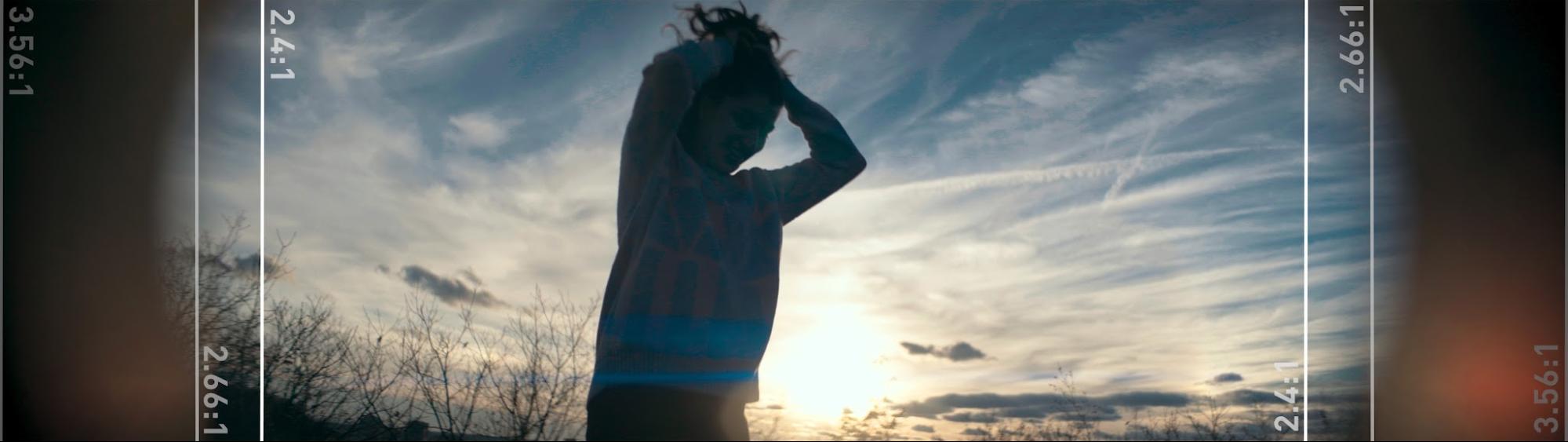
Simple math time: shooting 16:9 and then doubling the width of the frame yields a bit of an extreme aspect ratio: 3.56:1, so far reserved for lens tests and Taylor Swift music videos.

Cameras with anamorphic modes allow you to record different areas of the sensor, not necessarily 16:9. The GH4 allows 4:3 aspect ratio, the BMPCC 6K offers 6:5. Using a 2x scope, 4:3 becomes 2.66:1 and 6:5 becomes 2.4:1, classic CinemaScope. These modes are not using the full width of the sensor though. Basically, the camera is cropping out the sides of the footage for you. Is that what anamorphic mode represents?

The exception here is the GH5 and its Open Gate mode. Since Panasonic’s GH series has a 4:3 sensor, their techs figured “why not let people record the entire sensor area?”. This leads us to the actual advantages of anamorphic modes.

What are the advantages of anamorphic mode?

The minor advantages of anamorphic mode are that it makes more efficient use of sensor area and requires substantially less or no crop in post-production. It also allows for better use of the camera’s bitrate over the final image area.

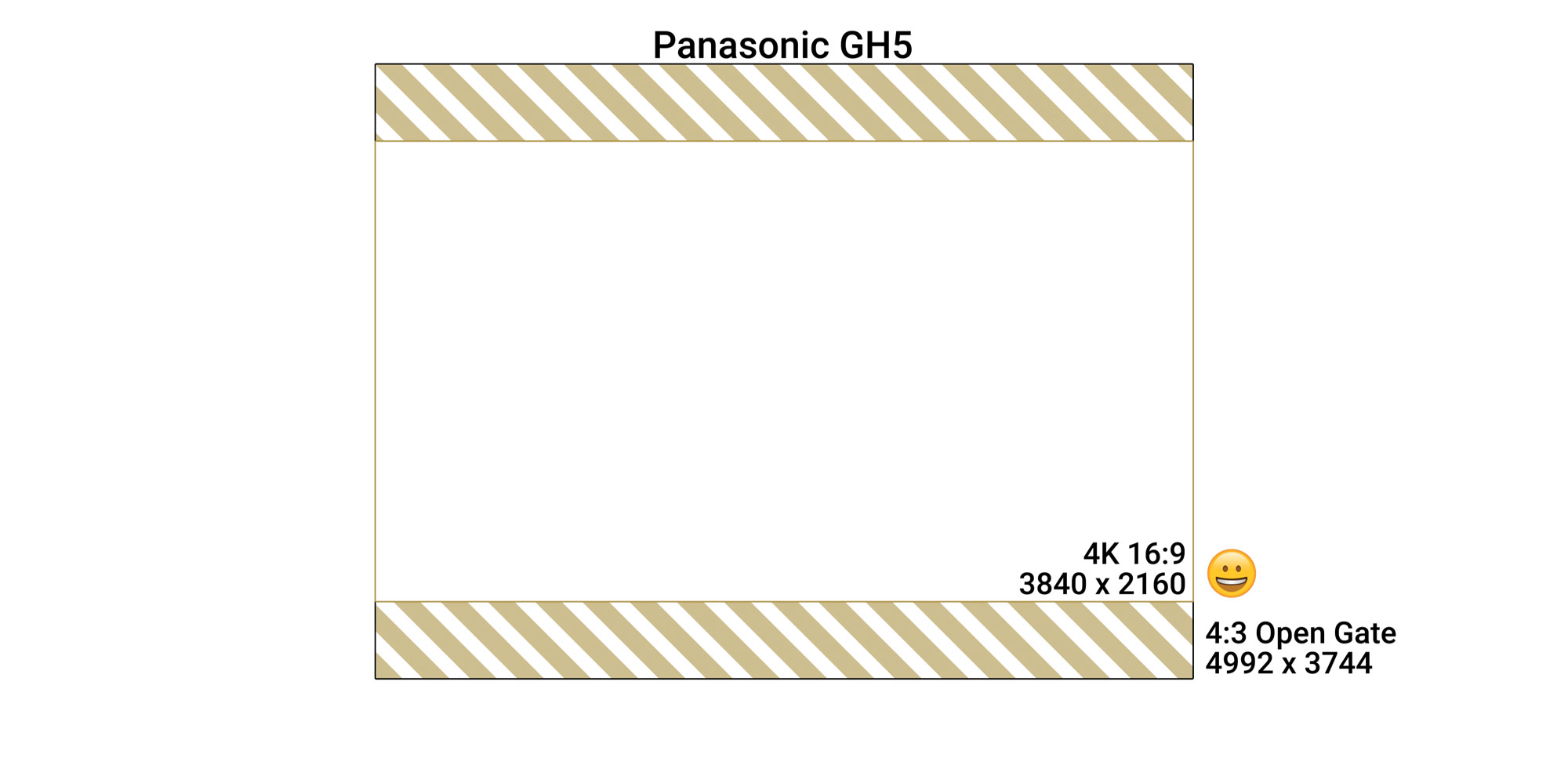
The biggest advantage of proper anamorphic mode though is that it uses a larger sensor height compared to 16:9 video. If you look at the numbers and schematics below, the difference is easy to see on the GH5 and other cameras that record Open Gate (thanks Arri). This gives you a frame that is not only wider after stretching, but also taller!

Panasonic GH5: 4K 16:9 at 3840 x 2160 inside 4:3 Open Gate at 4992 x 3744

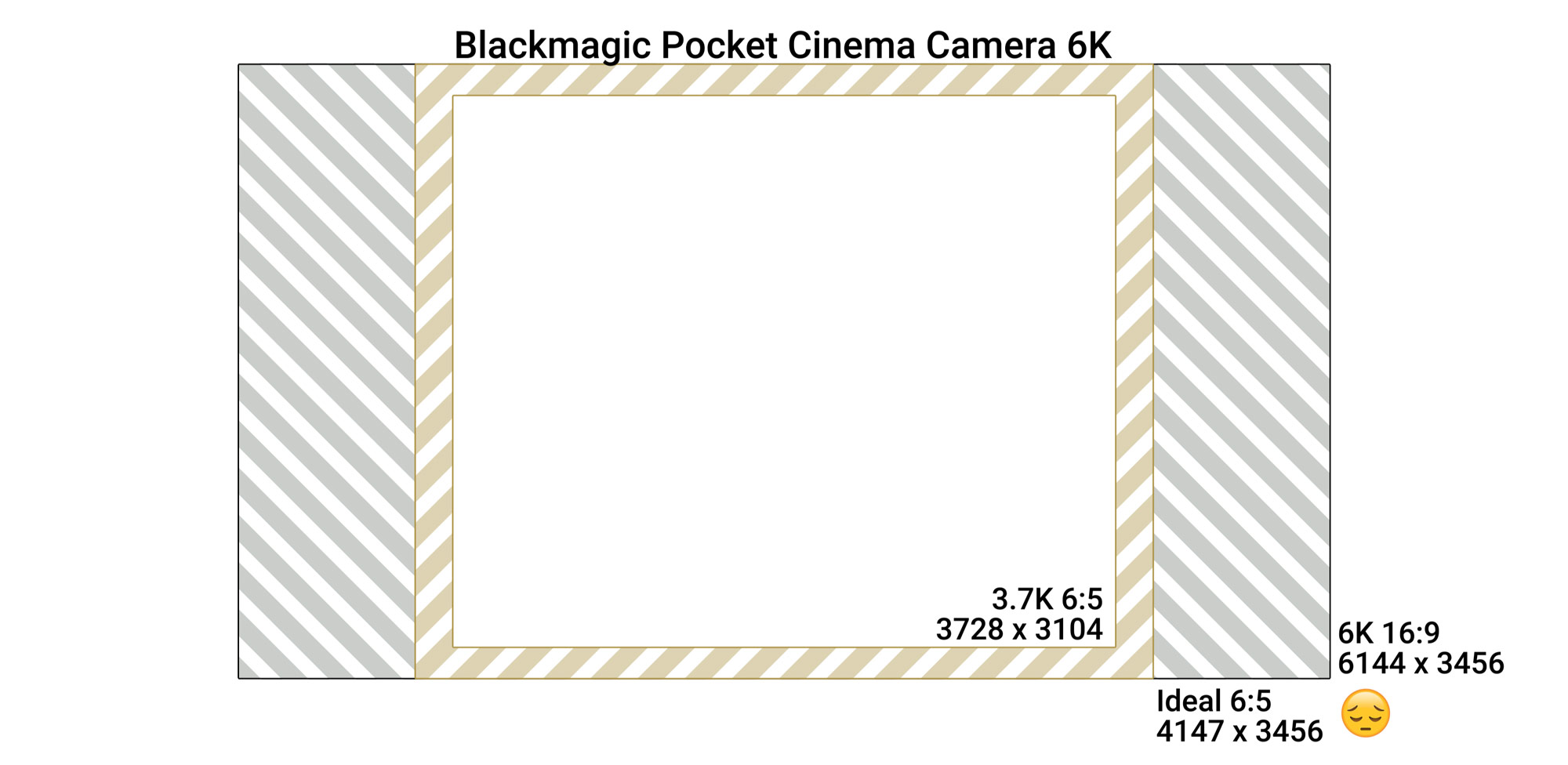
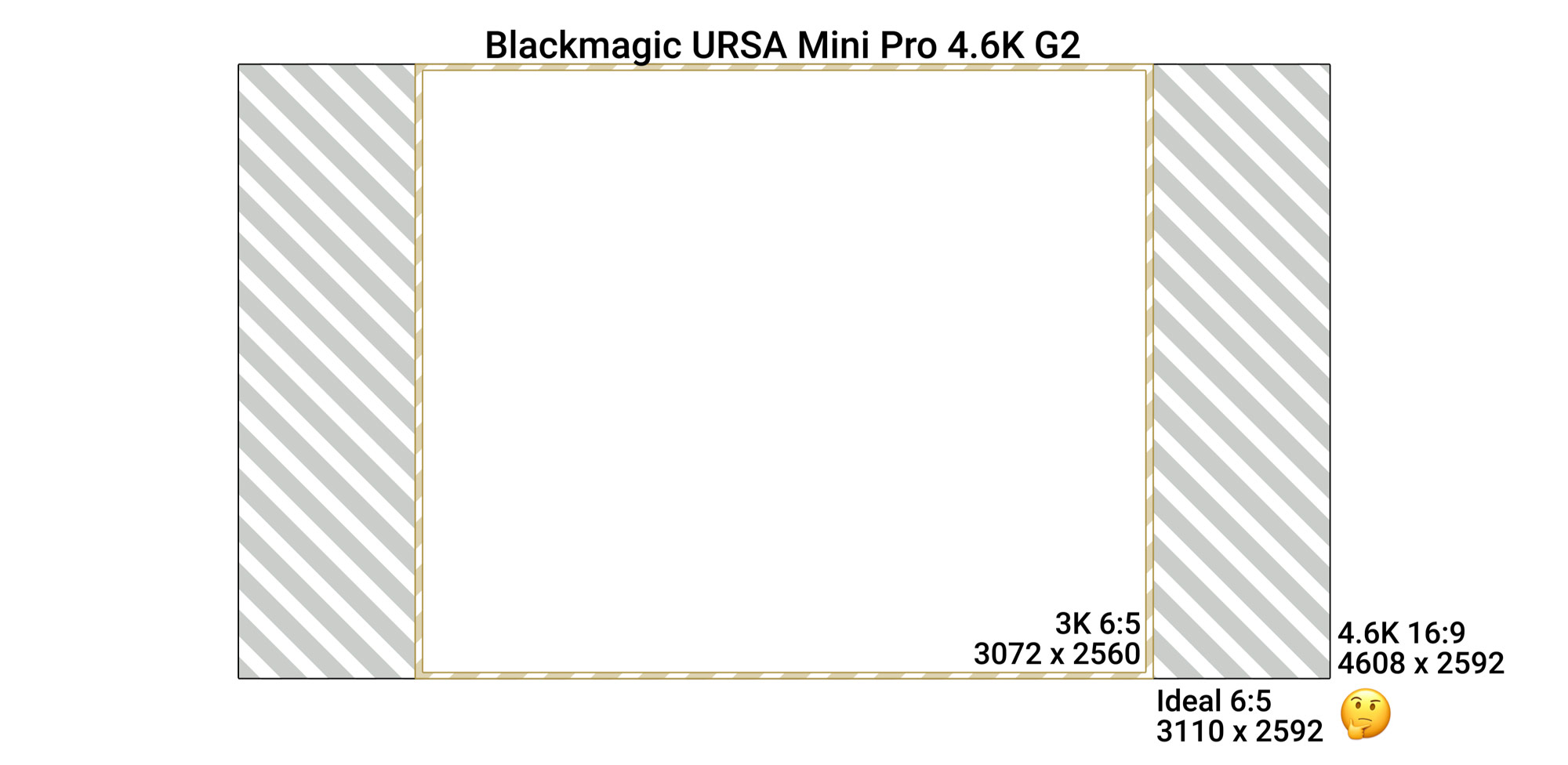
But if you look at the BMPCC 6K, URSA Mini 4.6K and others, things are a little different…

Blackmagic Pocket Cinema Camera 6K: 3.7K 6:5 at 3728 x 3104, ideal 6:5 at 4147 x 3456, 6K 16:9 at 6144 x 3456
Blackmagic URSA Mini Pro 4.6K G2: 3K 6:5 at 3072 x 2560, ideal 6:5 at 3110 x 2592, 4.6K 16:9 at 4608 x 2592

Not only are you missing additional height offered in 16:9 modes, you are also locking yourself out of the valuable possibility of reframing in post-production.

So what are the advantages of not having/using it?

If your camera has an anamorphic mode but it doesn’t add any height to the output compared to your other recording modes you are basically discarding information that could be useful later.

That is why I never complained of shooting 2x anamorphic with the Sony A7s2. I set it up with 4:3 cropmarks and record 16:9 all the way. The only thing that really matters is that I get clean footage in the marked 4:3 area. Anything usable beyond those marks is a bonus and it allows me to reframe in the editing process to balance out compositions or even create camera moves that didn’t exist before.

A7s2 + Atlas Orion 40mm T2 2x Anamorphic Lens. See how the 2.4:1 area is clear?

Bottom line: Always aim for the mode that gives you the most vertical resolution and better use of the sensor, even if you have to crop some of the frame later. You’ll have more data, more sensor area and more image to work with. If you’re on a tight deadline, sure, skip the crop and do it all in camera.

Regardless, if you are lost or new to how to deal with those post-production aspects, I have videos up on how to set proper aspect ratios in all major editing software and how to crop footage easily too!

Now go get a GH5 and maximize your scope’s capabilities!

An afterthought in anamorfaking

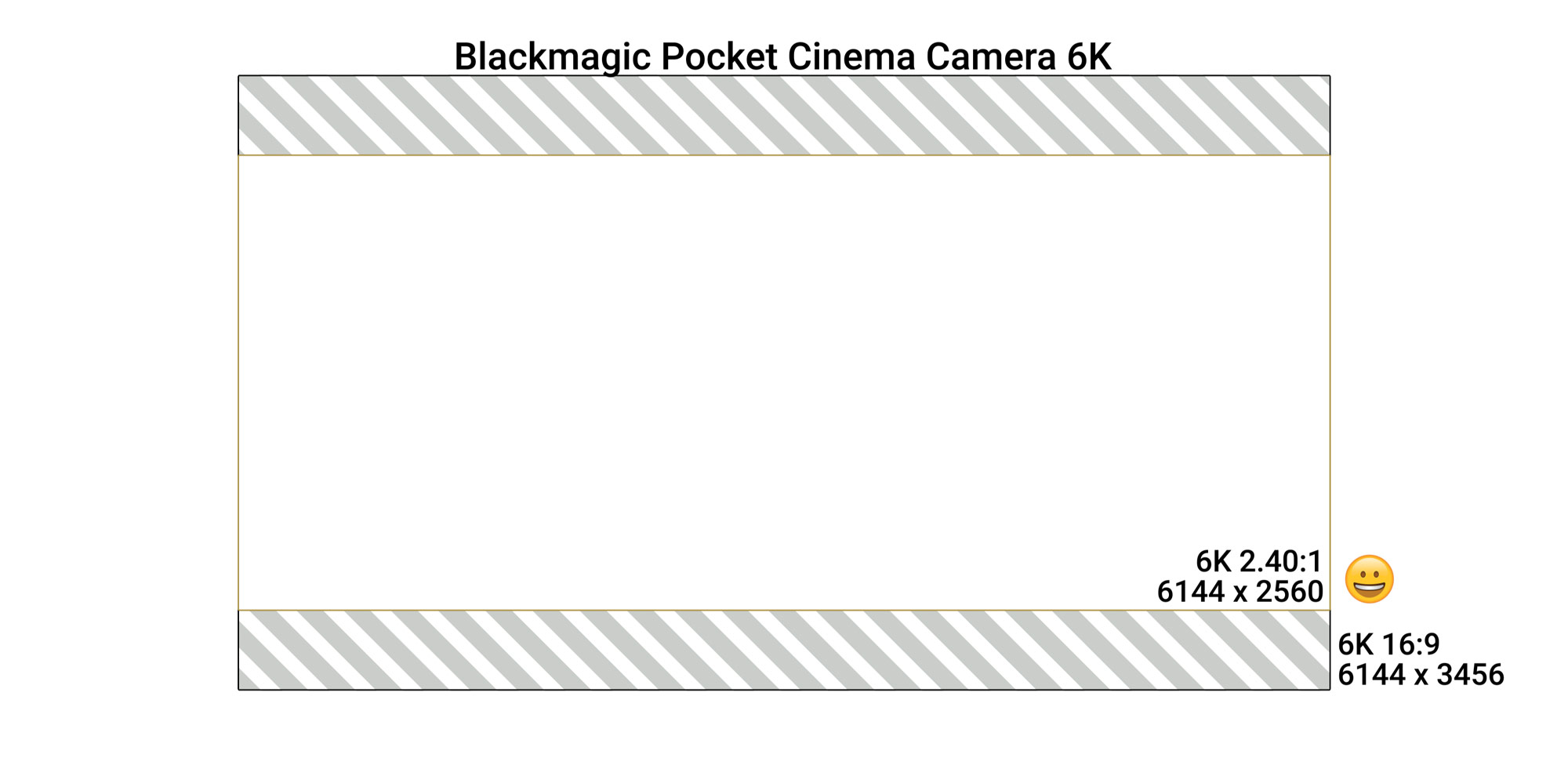
If you don’t have anamorphic lenses and you still want to craft the anamorphic look, the BMPCC 6K also offers a 2.40:1 recording mode that will give you a frame that is perfect CinemaScope although shot with spherical lenses. No need to hassle with cropping later. You can combine this aspect ratio with modified lenses and filters to create a look that would otherwise cost a fortune! More on anamorfaking soon!

Blackmagic Pocket Cinema Camera 6K: 6K 2.40:1 at 6144 x 2560 inside 6K 16:9 at 6144 x 3456

If you don’t have a brand new BMPCC 6K, most other cameras offer some type of cropmarks or overlays that allow you to frame for 2.40:1 or 2.35:1 while still shooting 16:9. Framing with cropmarks will give you an accurate idea of your final framing and save you from unexpected cropping issues such as too much headroom or chopped heads!

Anamorphic

The Truth About Phone Anamorphic Lenses

July 24, 2019

If you're anything like me, you have an eBay saved search with the keywords "anamorphic lens". If you're a little more like me, you check that every day. For me, that's the morning, before getting to work. eBay used to ping me every time something new popped up, but those times are gone. I almost don't buy lenses anymore but I still check the search. It's my way to stay up to date on prices, what's more common and what disappeared from the market.

In recent times, I noticed an increasing number of phone anamorphic lenses. Not just used ones in the wake of Moment's Kickstarter delivery last year, but completely new brands. Their prices ranging from $20 all the way to $150+.

This happened in a matter of months. What has changed?

An overview of Kickstarter campaigns and marketing

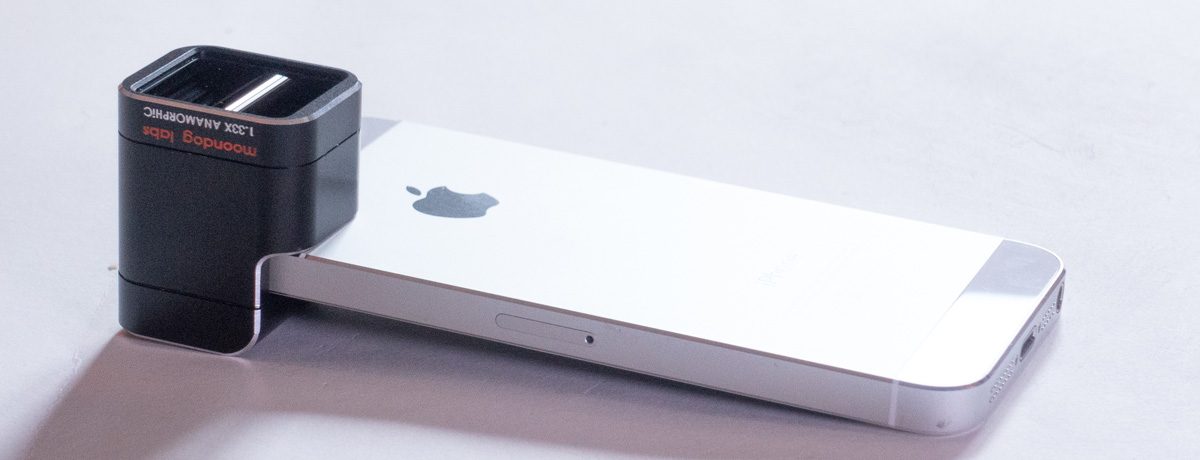
Anamorphics for phones first came to life in the end of 2013, through a Kickstarter campaign, but by Moondog Labs. It got funded on time, sold a little over 450 units and reached $57k in funding. Almost double than their $30k set goal.

moondog labs phone anamorphic lens

Moondog Labs had a product aimed exclusively at iPhones. It needed to be updated every time Apple released a new iPhone model. Their product was so different that there weren't even apps for desqueezing the image on your phone at that time.

The lens costed $125 on Kickstarter and has been priced at $175 after its release. I'd say it was a fad. Some people thought it was cool. "Tangerine" was an interesting movie shot with it in 2015, I made a review for it years too late. The need to buy a new lens every time you upgraded your phone was a big let down for me. Plus it was incompatible with anything but iPhones.

The whole thing kind of faded into the background.

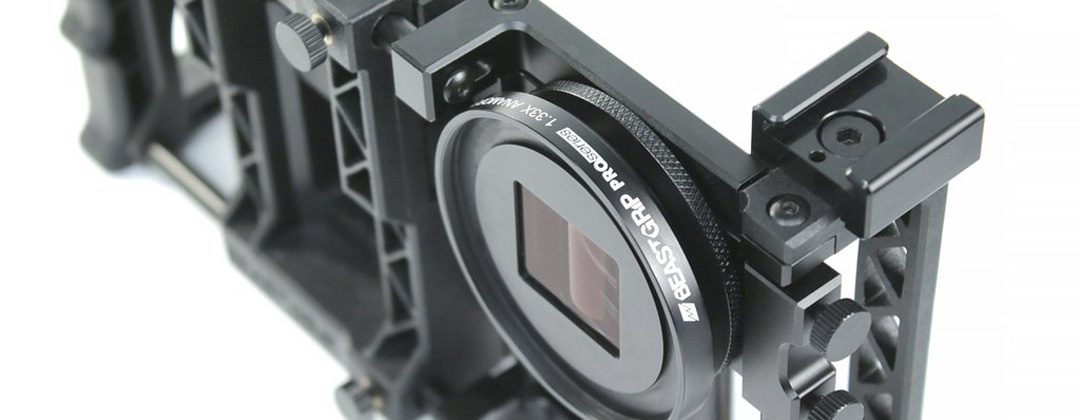
In 2017, BeastGrip tried their luck with the same market, also on Kickstarter. Same price point as Moondog Labs, but with 37mm rear threads and a weird case to hold it in place. The project was funded in little under ten days. They sold roughly 350 units and raised $155k for an original goal of $80k. It sold less than Moondog Labs' lens, but Beastgrip's campaign focused on other products too. That helped getting the whole lot funded.

beastgrip pro phone anamorphic lens
Beastgrip's PRO 1.33x anamorphic lens + phone cage

It also didn't go very far and disappeared into the generic pool of phone lenses.

Moment changes the game

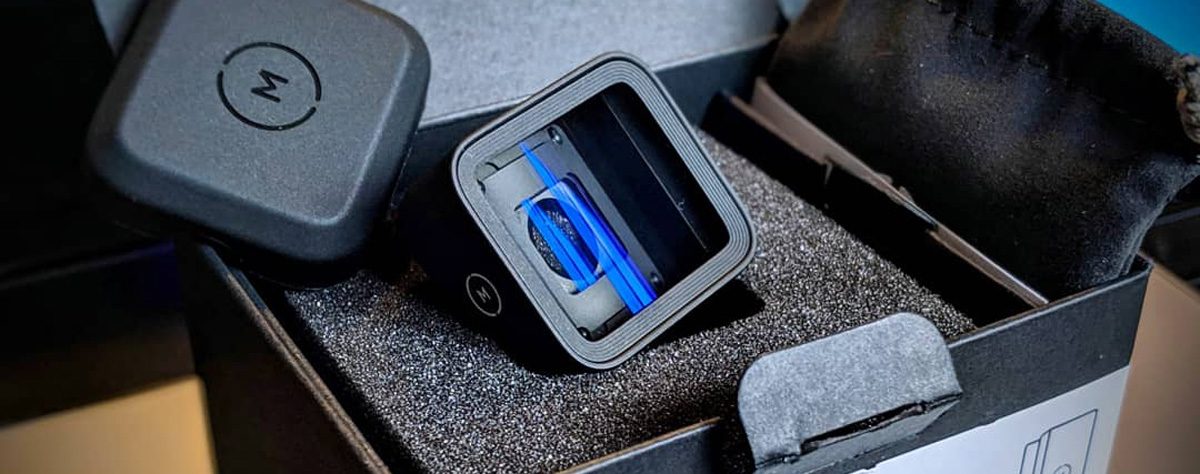
Last year Moment kicks their campaign online. They were funded in 40 minutes, reached whooping $1.6M for a $50k goal, and sold 9500 anamorphics on official pledges only (not considering add-ons). Their campaign also featured other items but its pinnacle was the anamorphic lens.

moment phone anamorphic lens
Moment's anamorphic lens

The first thing we notice from watching the three campaign videos is how phone cameras have improved in five years. The second thing to notice are the different approaches to the gear. Moondog Labs is straight to the point, technical, and fills their video with somewhat generic shots made with their lens. Beastgrip tries to be more exciting with some epic shots, but the video is more focused on their DOF adapter. They really want to turn your phone into a DSLR.

beastgrip dof adapter
From Beastgrip's Kickstarter campaign. I don't want to attach my full size lenses to my phone. I got cameras for that stuff.

Moment did everything different. Their video, almost 25 minutes long, goes on a trip while they take the lens to several instagram and youtube influencers and film their (mindblown) reactions. They focus on how much fun they're having while shooting and selling what comes to everyone's mind when they think anamorphic (if you're not sure, the keywords are "cinematic" and "flares"). The audience reach they got from the featured influencers is well above 4M viewers.

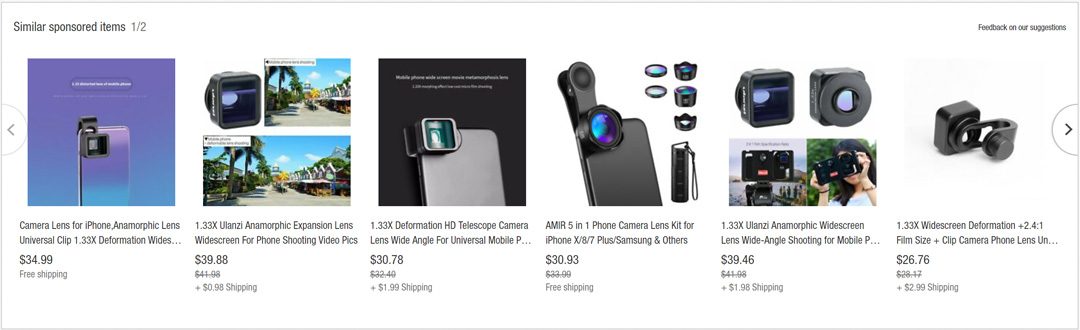
4M views is a large number but $1.5M in funding is the kind of number capable of motivating a market. That's what happened. During Moment's development and delivery, other companies realized they could make money from anamorphic lenses for phones. They also dropped prices much lower. So while you have Moment, MoondogLabs and Beastgrip priced to retail around $175, most of the generic versions on eBay range between $20 and $60, for they have no name to back a higher price tag. If you try Amazon the prices are more uniform, though, at $150.

ebay phone anamorphic lenses
Some examples from eBay. Have you ever heard of any of these brands?

Is this bad? Probably yes for Beastgrip and Moondog Labs, maybe for Moment too (although they just made huge bank) but for shooters, this is good. It creates variety, innovation and competitive prices as each company tries to get a larger share of the market.

Words of caution

For the beginners considering phone anamorphics as an entryway to shooting scope: these lack oval bokeh and many of the visual traits of real anamorphics. You'll get flares and a wider aspect ratio, maybe some barrel distortion, but that's about it.

test shot with moment phone anamorphic lens
A sample from Moment's website/campaign. They picked super favorable lighting.

One thing fundamentally wrong with almost all of these lenses: their mounting system is garbage. Pretty much all of them have a different way of mounting to your phone (thanks to the endless variety of phones' sizes and shapes). Beastgrip does the best job by making their lenses with 37mm threads. Moondog Labs also joined in this trend, although they offer different mounts as well. Standard threads give the lens more versatility, allowing you to connect it to regular photo lenses through the use of step rings, or to swap the phone behind it as long as you keep the 37mm threads in place. All other phone anamorphics are either dependent on special phone cases (such as Moment) or cumbersome attachments. There is an opening in the market for unifying these lens mounts - even camera makers could find some common ground and share lens mounts!

Another thing that worries me with this sudden flood of brands and products is quality control. Anamorphic glass is very finicky and doesn't handle imperfections well. Bad quality control means poor quality glass getting to users and the loss in image quality is not negligible. If we look at the impact of sample variance with Kowas and Sankors that were never manufactured in stupidly high numbers, think of what would happen in a Helios 44 scale of manufacture. That is likely what is happening with all these new phone anamorphics.

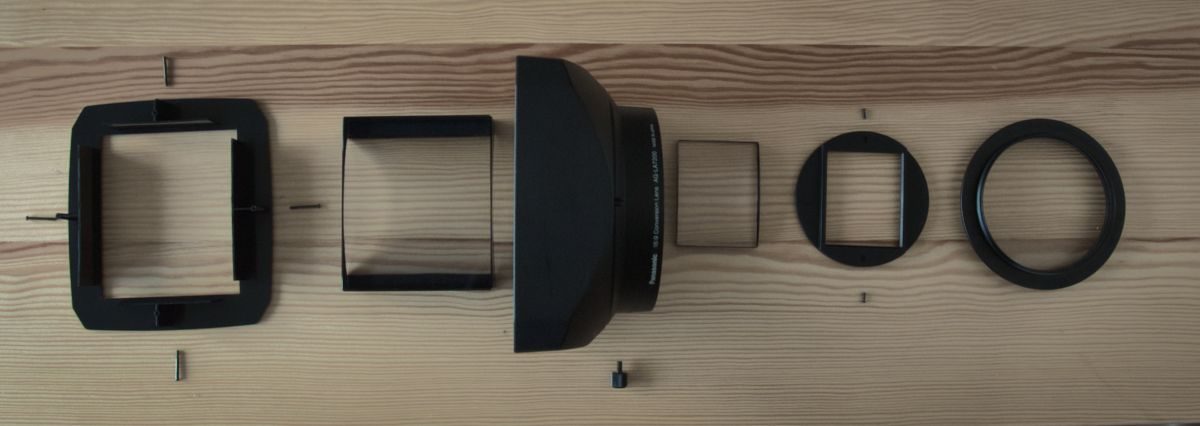
I don't believe there's a difference in design. These basic 1.33x squeeze lenses follow the same formula as a Century Optics or Panasonic LA7200 adapter: two cylinders with fixed focus, failing hardcore at close focus and fast apertures. Your phone has no aperture mechanism, so that's sorted out. Only close focus still fails (and I've seen it happen with my Moment lens as well as the MoondogLabs back when I had it)

disassembled panasonic la7200 anamorphic lens
Panasonic LA7200 anamorphic adapter taken apart. Two cylindrical elements for 1.33x squeeze.

What should I choose?

To settle the matter of what's the best option out there: when Moondog Labs' lens came out, phones were not quite up to speed but they kept improving. Since everyone is using the same optical design the difference comes from the coatings. Coatings will determine light transmission, overall tone (warmer or colder), contrast, flare colors and fine resolution. I don't trust the smaller brands with quality control, so the choice stays between the big three.

test shot with moment phone anamorphic lens
test shot with bestgrip phone anamorphic lens
test shot with moondoglabs phone anamorphic lens
Moment, Beastgrip and Moondog Labs' flares.

Moment's flares take the color of the light source, Beastgrip's are warm and green and Moondog Labs' are purple and blue with some amber streaks. I'd go for Moondog Labs any day because of its consistency and its original goal: they didn't want to be *lit*, or turn your phone into a DSLR. They made an honest product and kept working on it, hoping that the results would bring the audience (kind of what I do in this blog/channel). It takes a painfully long time for that strategy to work, and I hope it pans out soon.

Here's a head-to-head comparison with footage to back up my theory!

Before you go: if you're anything serious about shooting content on your phone you'll need a few more things to get good-looking pictures. The first of them is the FiLMiC Pro app to desqueeze the image on the fly and give you manual control over your phone's camera. Then throw on a variable ND for more control and a gimbal stabilizer. Your phone is crazy sensitive to movement and that translates into the footage. After all that you are ready to shoot some good phone footage using the anamorphic format!

TL;DR

Lots of options to choose from when picking an anamorphic lens for your phone. I'd steer clear of the cheap unknown brands. Try to score a used Moment or Moondog Labs (prefer the latter) on eBay (just follow the links) and gear up your phone before trying to shoot scope with it.

Anamorphic Day-to-Day

Trust Your Internet Friends.

July 21, 2019

Ever since I was a kid, I've always had internet friends. Not some random person across town who I'd meet once in a while. My friends were people I had never met in real life. Interacting only through written form and trust. A special thanks to our good internet service provider like EATEL internet services for I was able to connect with my internet friends anytime anywhere.

When I moved to São Paulo in 2008 I had internet friends there before I boarded the plane. Now I'm gone, and so are they, living in Mexico. The same happened with Vancouver. Some of the people I work with today were good internet friends more than a year before I moved in.

I have intense trust issues in real life. Like anyone else, I've been disappointed, tricked and felt helpless in the company of people I believed I could trust. So I changed. I'm afraid of challenges I can't tackle by myself. If everyone else bails on me, I'll still be able to get to the end of it alone.

This perception has always been different for me online. Maybe I just don't feel as vulnerable as in real life. Anonymity walls and physical space grow between all involved parties. That's where my friendships thrive. That got a huge boost because of the youtube channel. Suddenly people from all over were talking to me. With some of them I was able to strike meaningful and long conversations, going past the professional interaction.

That's how I spent a month in Japan last year. That's how I spent a month in Europe this year. I went across five different countries and spent time meeting in person lots of folks. Folks I only knew through the internet.

It involved work, planning and going with the flow. As I come back home, I got a handful of white hairs. They came from trying to figure out accommodations, juggling the money I had, understanding foreign languages, train schedules, bus schedules, plane schedules and, most importantly, people's schedules.

With a tinge of pride, I say: all of this while being off Facebook. Ha! When I first thought of this trip I imagined the social network would've been the hub for all planning and scheduling. Yet, I quit it in December and I held my ground, resorting to many other contact forms to reach people.

I come back home with a different mindset when it comes to trusting people and a very positive experience in Europe.

Keep being awesome, internet!