They're playing our song.
Do you think I'm ready yet?
They're playing our song.
Do you think I'm ready yet?
Not sure how this is gonna go, but let's give it a shot.
Here at VFS, once we reach Term 4 we're moved into the studio and each student has their own assigned slot and computer. If you're reading this you're probably a VFS student and know it all too well. Anyway, that's also the moment that we get our Industry Mentors, people that are currently working on shows or features that come to the school, once a week, to give us advice and review our work.
As you might've gotten from all my previous posts about hard times and such, I lack social skills and I'm a little too much task-driven. For the VFX folks at 3D111 our mentor was a guy called Werner ten Hoeve. First class, he calls our names as we enter the door. Gotta admit, that makes you feel a little special, he's not just trying to decipher the names on the fly, he actually took time to know all the faces and stick names to them. He shows us some of his work, explains how the classes are gonna go - "render your stuff to show me, I don't wanna wait forever while you render and it's your turn" - and rushes us back to the studio.
For Term 4 he got really close to some of us, chatted a lot, told stories about work, showed us unbelievable work, spent more time with some and less time with others. I was usually one of the fastest to get feedback, I never had much to chat about. I'm not too good at knowing which company worked on which movie, or who's this or that compositor, so small talk didn't go far. Eventually we got to talk about filmmaking in general, set experience and all the crazy stuff that happens in real world, and that got me into the conversation - mostly with Sean and Rityka. Then we started to talk about movies, and references - fucking Seth Rogen references, every class, man! - as I started to think that's not the regular conversation students have with their mentors. At least that's what I got from hearing the animators and modelers talking to their mentors. We joked. A lot. All the time.
That doesn't mean Werner was a cool guy that would give an "ok, move to the next shot" easily. Hell no. He also wouldn't spare hard comments when they were needed. He's always been very direct about feedback and that got my respect right from the start. I'd rather have my work trashed than waste time working on something that isn't going the right path. And we had that, several times, thank you very much. I had dealt with picky clients when freelancing back in Brazil, but never like this. The great difference this time was, whenever I worked on the fixes, the shot actually improved - sometimes drastically.
By the end of Term 4 I wasn't too close yet. Term 5 was the moment when the magic happened for me. I mean, we could talk on facebook, what other mentor does that? I've always tried to avoid talking about work whenever we chatted, because facebook isn't work, right? At some point I hit a wall with one of my tracks. I was three weeks in in Term 5 and still working on my first VFX shot (one which I thought would be simple) out of seven. The track just wouldn't stick, no matter what. Then, one sunday I didn't know what else to do to get the shot working and sent him a message out of desperation, shoving all the problems I was having onto his way. I can't remember what he replied exactly, but based on that reply I changed my way of working. Not trying to get it all done at once. Small steps. Get one thing working, move on to the next, onto the next, and the next and so on until it was finished.
I got that shot done before Wednesday on that same week (we always had Werner's classes on Wednesdays). Of course it wasn't final yet, but the track worked and I learned that sometimes automatic stuff won't help and you need to push through hundreds of keyframes, sometimes it's easier - and you get to listen great music in the meanwhile. Later on I went back to that shot for some fixes he suggested that made it better (like the ship reveal on the sky).
After that one shot was done, I went berserk on the others, taking them out of the way as fast as I could, as good as it could. Once we had a first pass on everything - except the last shot, but that's gonna be explained later - Term 5 was getting to its end. During the break I sent him another huge message, saying that I was feeling I could do more and sometimes would have nothing to work on while waiting for feedback. He replied that he was going to push us hard in Term 6. We took some extra time besides all the feedback and shots while he explained me how shotgun was supposed to be used, and we spent over a day setting my account more like a real world one - "do you see the Tasks area? well, put your tasks there. Upload shot versions, not just random things onto Media" and a lot more.
By that moment, I was willing to trust my life to this guy. Aaaaand then I got very fucked up and had to go back home in Brazil. It was week 4 and we just had our last official presentation before Graduation. All my shots were final but the last one. The last one had always been some kind of wishlist. A thing so elaborate that I actually thought I couldn't pull it off. Thanks to being on that stage I was allowed to present my reel at my class' graduation ceremony and come up on the stage with them. Werner was very supportive when I told him I had to go home. He came to school off his schedule so we could talk about what I was going through.
While I was home I had plenty of time to think. Process some of the crappy choices I made, think about what I wanted for my life, what I wanted regarding work, and that eventually led to another of those huge messages I sent him. This one was tricky because it wasn't about anything specific, it was about work in general, all my insecurities and doubts, all my fears, everything I thought I couldn't handle was there on display and, I have to say, he aced that conversation. By that time he was already a close friend.
I worked on some small stuff for my last shot while I was home, not much. I also spent some time on the WeatherCaster app, but in general I didn't work hard. I would say "I played around in Nuke". In the meantime he told me about his request to VFS that he could still be my mentor during this "Term 6 v02", which meant I would be his only student. How incredible can this guy be? Seriously, not only I luck out to have him as my class mentor, I also get to be his only student for two full months.
When I got back we talked some more. More shit happened, but I was in a different state of mind. Really, I was VERY different when coming back to Vancouver this last time. After our first meeting at the studio, he insisted that we went out and ate something - you could remember I was a little slimmer - which was awesome and the healthy food surprised us by being tasty too.
Another thing I did differently now was I took my time with work. That meaning I went VERY, VERY slowly about things, simply because I had a faint idea of how to get them working but didn't want to put it to the test and see it crash and burn, you know, like I said in this other post. I always ran my ideas through Werner, to see if I was going right about each shot and this time wasn't different, even when I presented what I thought to be a series of crazy steps to get the shot working. He had this "I'm about to laugh" look while he agreed upon my strategy. You should remember he's a funny dude. But he didn't laugh, he said that "do it!".
And then I went on, as brave as I could, tackling down tracking issues, growing the most confusing nuke tree in my entire reel, sorting out what should be comped first and what would come on top, slowly and always going back to Werner to be sure I wasn't overcomplicating things (I do that a lot too). The last week rolled by and I was left with just a couple fixes on a shot I didn't even think I was capable of doing. These were left for the end because... I had no idea of how to deal with them. Yesterday I was at the studio, in pain just with the thought of having to back into Maya to tweak renders and pray to the gods of mentalRay, and talking to Werner at the same time, saying I was about to go and adjust my geo to fix the issues I had left, when he mentored up and taught me some new tricks, which got things working without rerendering. Of course, he also pointed some larger issues which made me keep my computer running renders all night, but not the ones I was afraid of.
This morning, when I sit down at the studio I get a message from him "ready to finish this?". Last adjustments were done and submitted around noon. By then I shot him a message and went home. I was taking the bike out for my daily seawall ride when I notice two missed calls from Werner and a message of "check Shotgun". Hell, why check Shotgun if he just called me? So I call him back, expecting some smaller tweaks to be done, easily explained over the phone, but I'm wrong. He was calling to say the shot had been approved and I was officially done with the reel. SERIOUSLY, no one could ever ask for a better mentor than this. I couldn't ask for a better friend, for I've learned from him so much more than what school was supposed to teach me, for I tried for whatever-many paragraphs explain what he means to me and I still couldn't.
In short, if you skipped EVERYTHING ABOVE, I say that I wouldn't have gotten where I am without my mentor and my reel wouldn't be anything near what it is without his advice and support along the crazy ride these last 8 months were. Thank you, Werner ten Hoeve, you earned that first spot in my credits, my friend.
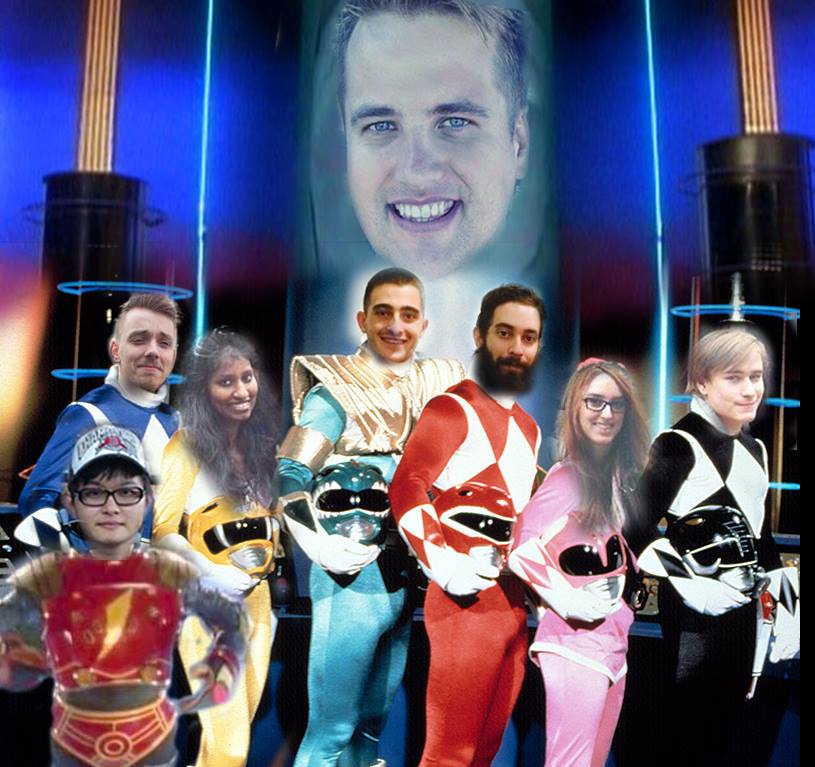
photo credit: Maria Juliana Caicedo Sánchez
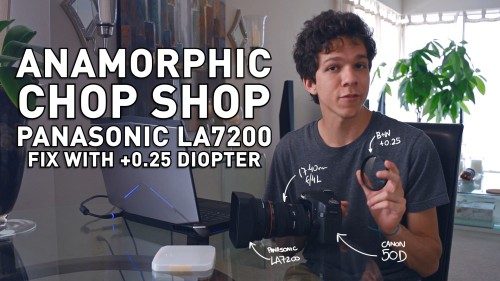
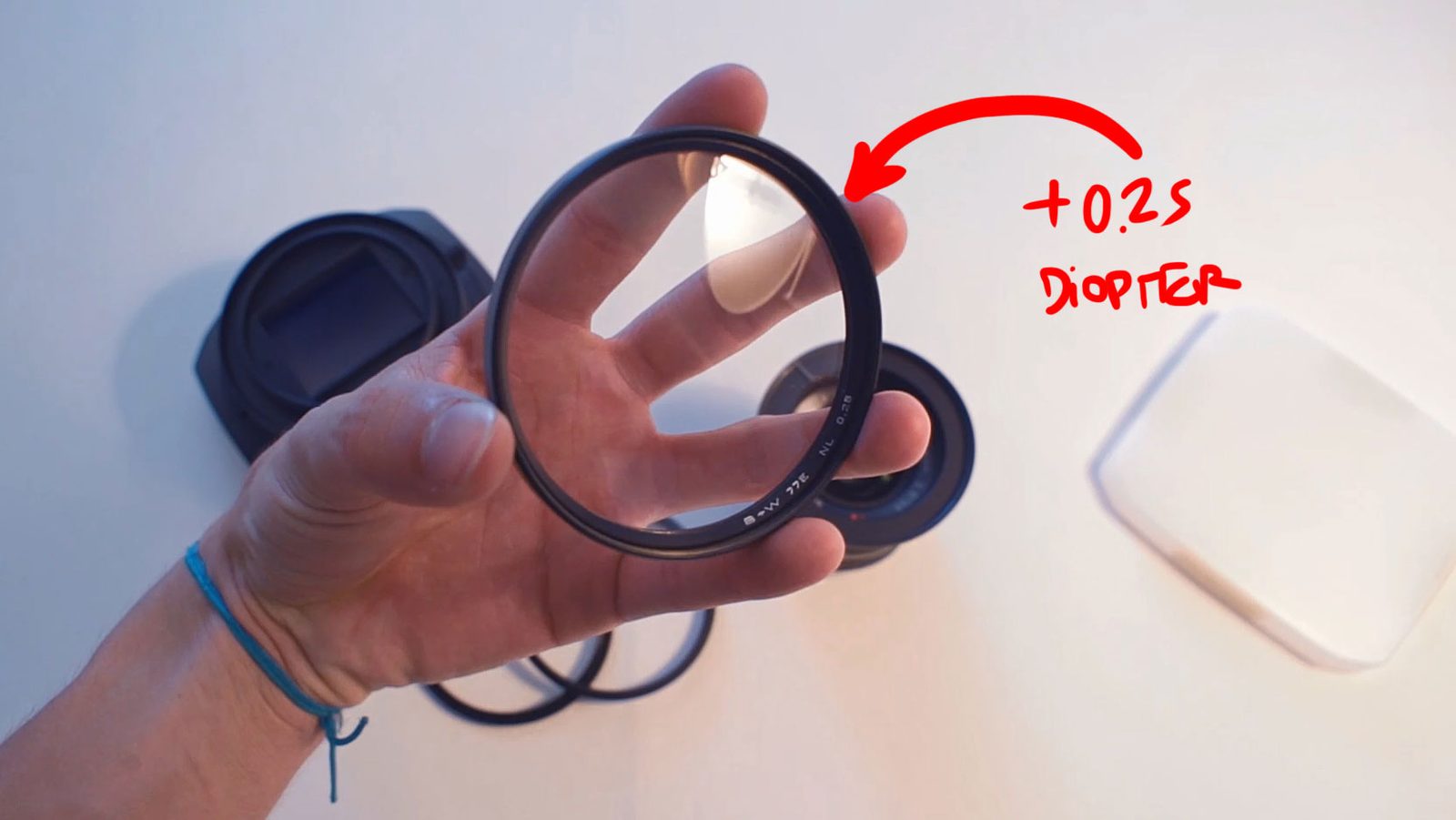
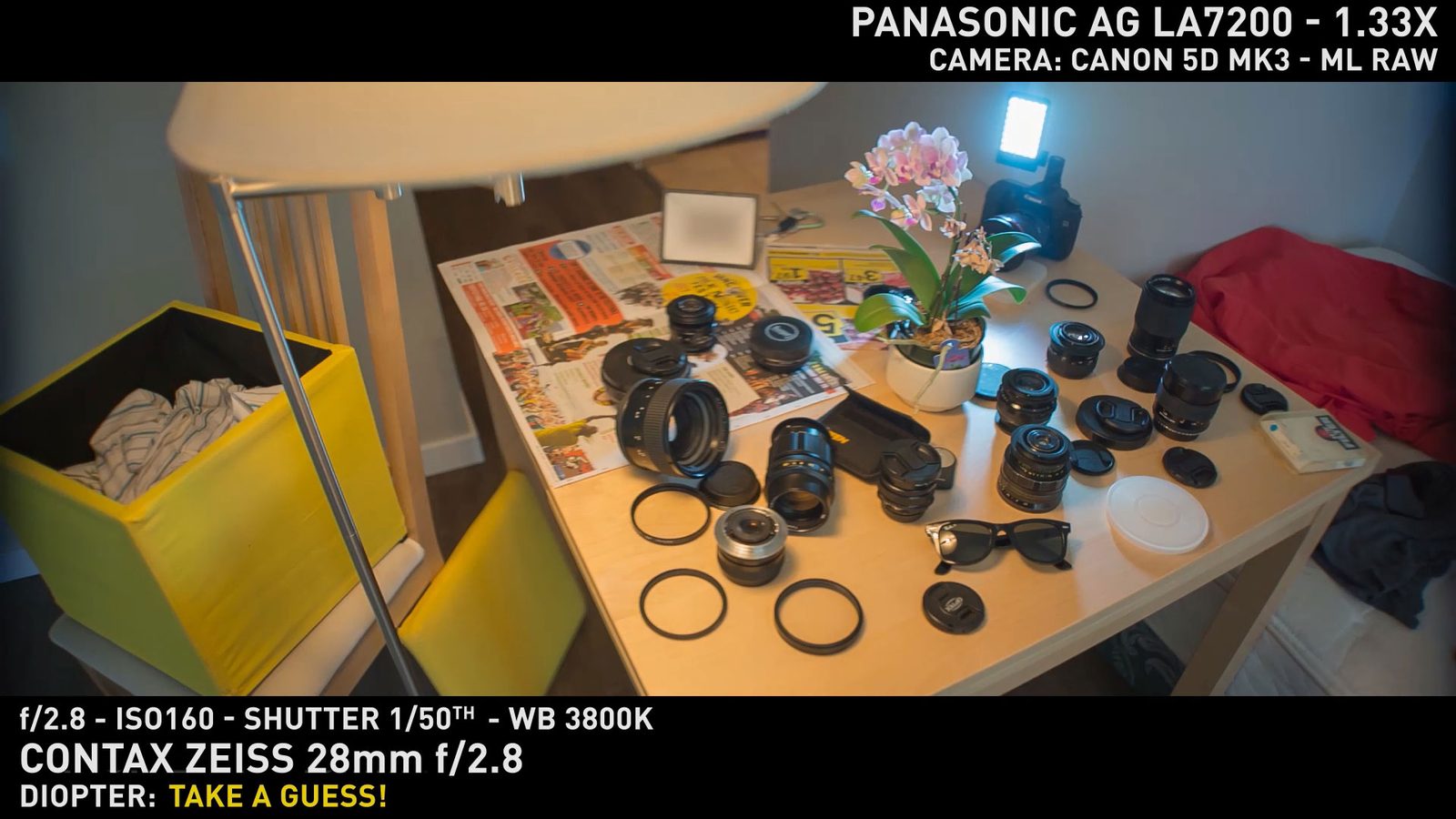
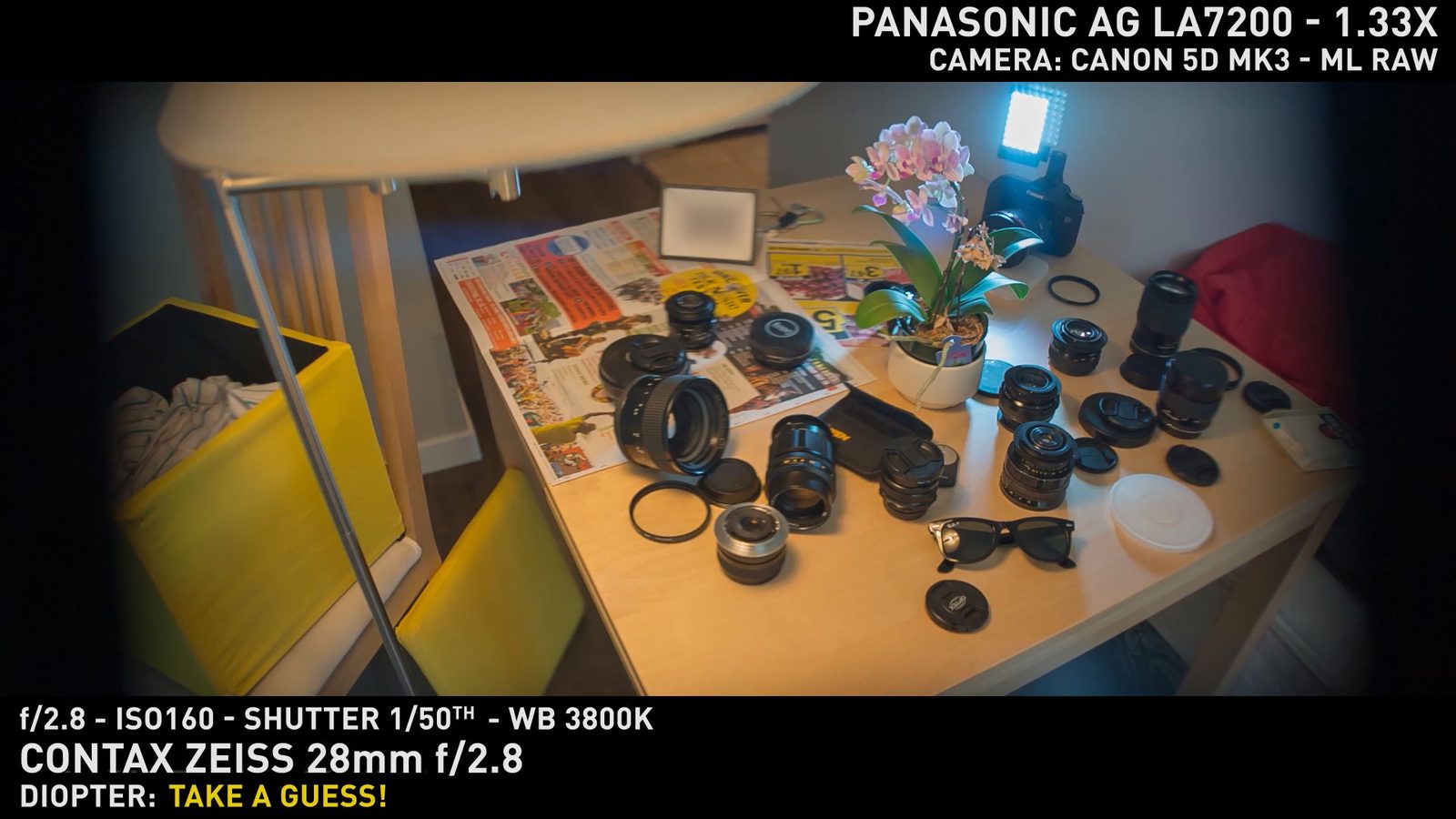
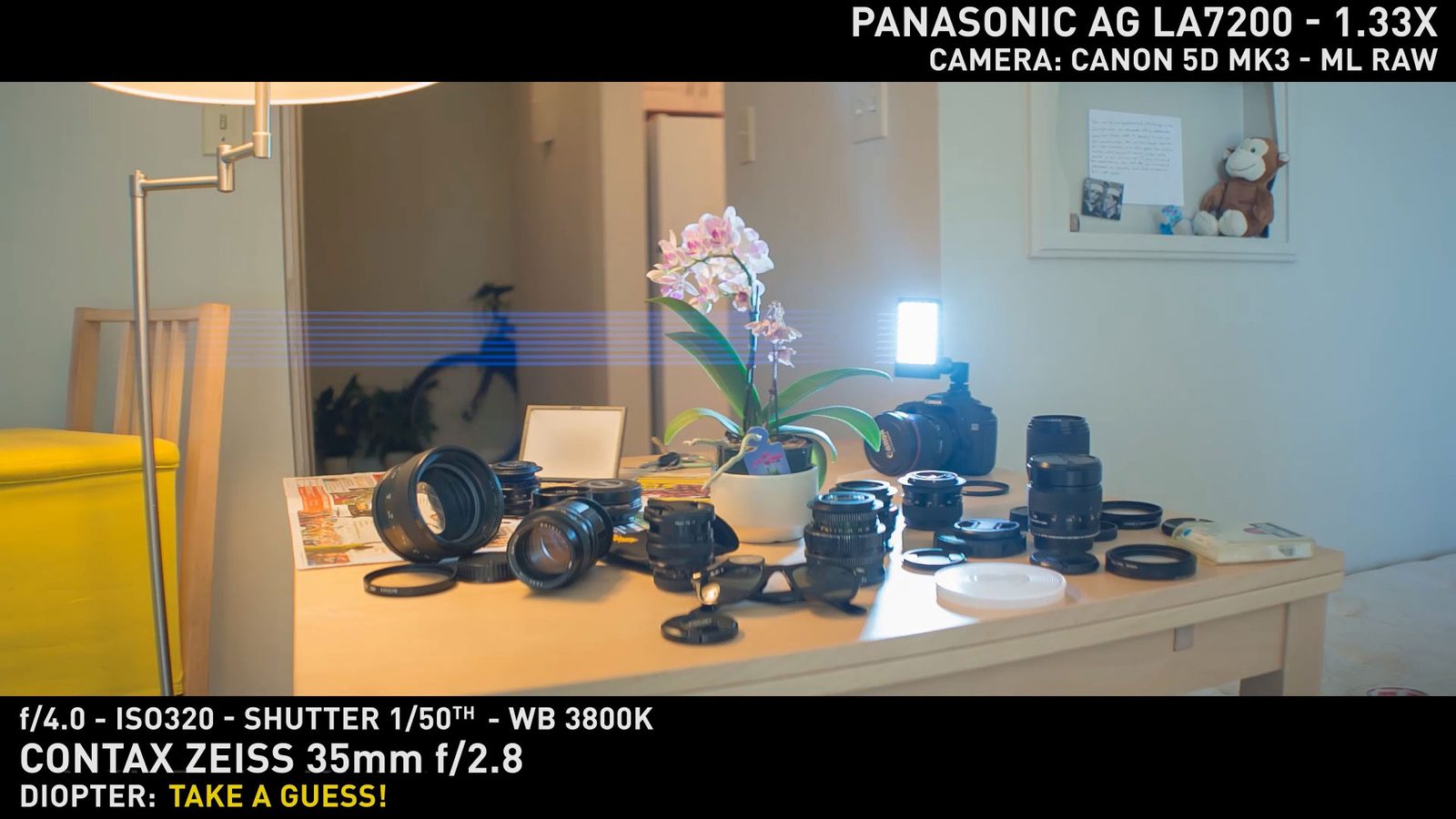
Does sticking a +0.25 diopter between the taking lens and the Panasonic LA7200 actually fix all the Panasonic's issues? Let's test and see!
Thanks to Rob Bannister, my partner at Creative Camera Rentals (creativecamerarentals.com), for getting me the +0.25, and Gearhouse Camera Rentals for the Panasonic LA7200.
USEFUL LINKS:
All the RED links on this post are part of eBay's Partner Network, so if you purchase anything through them, you're helping me to keep this project going.
You can support this project on Patreon. Make your contribution and help the Anamorphic Cookbook!
Starting today I'm gonna try a lot of different things to exercise my creativity. The key elements here are this blog, where I'll write at least one post every day, about random things, and my camera. Yesterday - one of the weirdest days ever since I came back to Vancouver - I went to Coquitlam in order to get some gear that allows me to carry my camera around in a practical and safe way, always at hand's reach for photos. I've tested it this morning, biking along the seawall and it worked pretty well. The camera hangs from my waist, like a holster, without straps and, most importantly, not bouncing around like crazy when I move.
It feels weird posting mundane events in english, but that's also something I wanna improve at. Feeling more comfortable communicating in any way, no matter the language. Now I'll get back to my renders, while I think about something relevant to post.
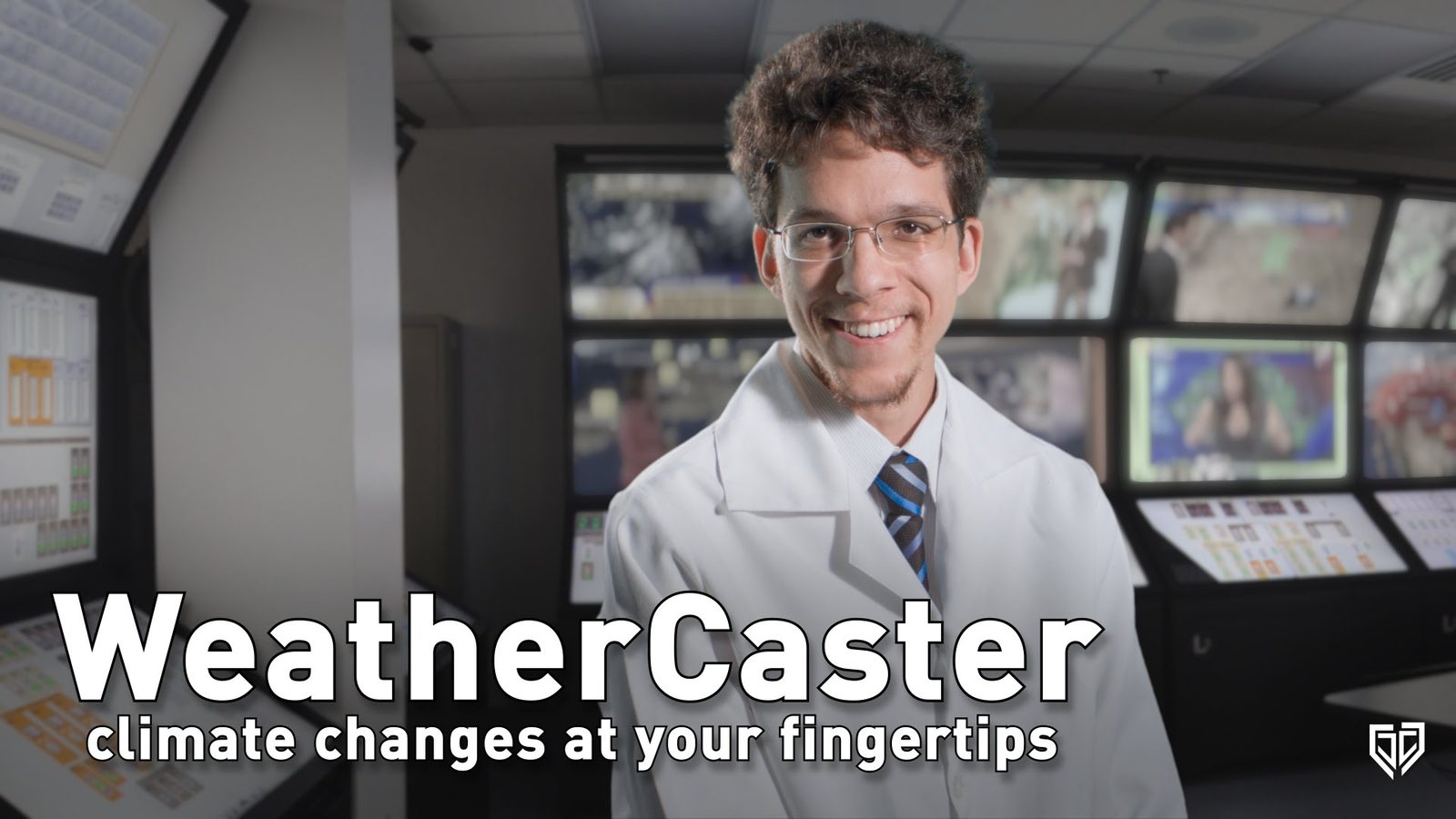
And it's finished! Many many thanks to Felipe Sampaio (Cogo), Diego Orge and my parents for letting me block the garden/backyard for almost an entire week! Also, thanks to mr. Panayiotis Verropoulos for the hint on the rain.
Read more about this project in the previous post!
A little too much on the title, I know.
We all have been through some harsh pathways in our time, that one which you got sick, or exhausted, or that time when everything went wrong, even what was dead right. But, if you are the kind of person that creates things - also known as artist, but not limited to that - you will surely understand what this post is about. The hardest journey isn't on the outside world. It's about getting that ONE idea, your favorite, that you think will change your life forever, that'll show the world who you are, and actually bring it from the realm of thoughts into the hard and limited reality we live in.
I've been through it several times, and each one is different, some literally kill the idea, others just transform it into something else - which might be positive or... not. When you're working on an idea, everything is perfect, our mind covers all the different possibilities, how to theoretically achieve each step, where to go from there and boom, you have an amazing result which you can clearly see BEHIND your eyes. Sometimes I stop at that stage.
Sometimes I like an idea so much that I procrastinate and postpone it to the point where reality tells me "yeah, now you DEFINITELY don't have time to develop that" and then it's dead, horror-movie style, coming back to haunt me every once in a while. On the other hand, there are those which I think I can take and bring to life in a viable manner. Of course I'm always wrong. My mind covers all the gaps and tricky parts with some theoretical crap ("If I have enough markers, shouldn't be a problem to track") or "I'll figure it on the go" philosophy, even when I plan for some trouble, most of the imaginary steps are flawless.
So I start, working on the concept and initial steps. I'll use my latest project as an example, just so this post is a little more understandable. About four or five months ago I was walking home from Gastown with a friend and telling him about this idea for an ad that I had, in which a user was able to control the weather using a phone app. The setting would be one of Vancouver's back alleys, but shooting it would be a little complex because I would need a camera taking photographs at regular intervals, without moving, for a long time. Vancouver is safe, but I wouldn't trust sitting beside my camera for two days, fighting off pedestrians, cyclists and cars.
Anyway, I was thinking of how awesome that would be, and what challenges would I encounter. Of course, it sounded cool for me, but I could find enough reasons not to push forward. A couple months forward I was home, back in Brazil, with nothing but spare time on my hands. My hometown weather is so crazy that I could have rain more than once a day and a very sunny sky a few hours from that. The weather app came back to mind and I decided that the to get that started I needed a script, since it was an ad, of 30 seconds or less. Also, I needed to find a place where I could put the camera to get all the weather variations without soaking it on the rain, not a dull composition to look at, not too much sky but at least a little, not entirely inside the jungle and, on top of all that, no cars or people passing by. All of that also would have to match the camera's view and fit some compositing standards.
Long story short, after two days trying out every single window, door and view around the house, I found a good spot in the garage, taking up one parking spot. Two DAYS, for a place that wasn't nearly as cool as the one I had imagined, but ok. Next step was to try it on camera, and think about the timelapse settings. In my mind it was like "so I'll just set it up here, and take an HDR picture - so I have control over exposure in post - every X minutes for Y hours". Then I got onto the math and I decided I needed 5 raw exposures at max resolution (20 megapixels) every two minutes for FORTY EIGHT hours. I don't live alone, so there would have to be lots of warning the other people in the house not to go into my "shooting area" and signs and tape. Still doable.
Then I called a friend (Felipe Sampaio, one of the few people I know that can understand literally everything I say when geeking out about comp AND photography) and we started to REALLY set up the camera. Of course, the intervalometer wouldn't work properly. Took us a couple of hours to sort that out. A little more time to get power to the camera to keep it on for two days straight. A sturdy tripod. Weather protection, tape, signs, which lights should stay on, which should NEVER be on, windows that couldn't be opened (about this, we're talking about a city which the average temperature is 30 degrees celsius), then we moved on to the lens. Fortunately, this little bit my mind got right and the 14mm looked nice enough. We did some extra set dressing removing stuff or hiding it from view so it wouldn't look too cheap.
We let it run for a couple of hours, looked steady, no picture skips, intervals working good, exposure looking nice. Awesome. Let's start. During the first night, I went down at some point to check it out and ended up messing up the exposure. I didn't know what I had done until about 12 hours later when I was getting all sorts of under and overexposures. Crap. Start over.
This time I let it run the full cycle, for almost two days, didn't mess with the exposure whenever I went to check the camera but one of the cards filled up faster than my calculations and I lost an entire night. Crap. Start over.
The third time, it ran the entire cycle. I got all the pictures onto my computer - over 100gb - and started to look for how to merge all those multiple exposures into HDRs. A couple of hours and I had a software running the conversion. 5 exposures of RAW files into TIFF HDRs. First, my hard drive wasn't enough to store it all. Second, it would take TWO WEEKS to convert everything. COME ON! Crap. Start over.
Fourth time, by this time the people in the house were already getting mad at the lights on and windows shut. Two more days, I asked, this is the last time. See, how the heck would I have predicted all these fucking-up factors in my mind? Back to the camera, I set it to three exposures, half resolution (still much bigger than my final output), JPGs, to save space and processing time.
This time I didn't mess the exposure, replaced memory cards before they were full, triple checked the power source so the camera wouldn't shut down, reinforced my signs and tape, and let it run. FINALLY I was able to get the timelapse. Well, that first part at least. The processing would take two more days. All these steps wouldn't take any time when inside my mind, this conversion would be done in a snap of my fingers.
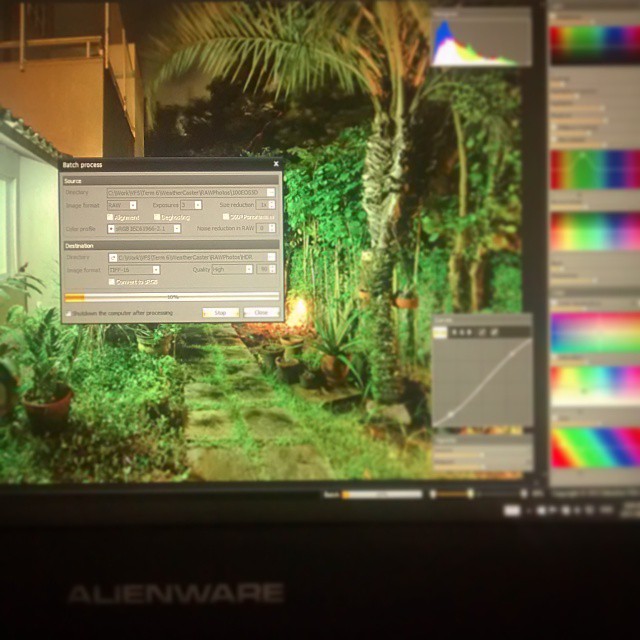
Luck kicked in again and the timelapse turned out good. I got all the weather I needed, rain and sun, clear and cloudy skies, a proper exposure at night, everything working. Next step, again, took me some time to figure out. I needed to time the voice over from the script and adjust the timelapse to fit that, covering the climatic conditions in the right times. After Effects time!
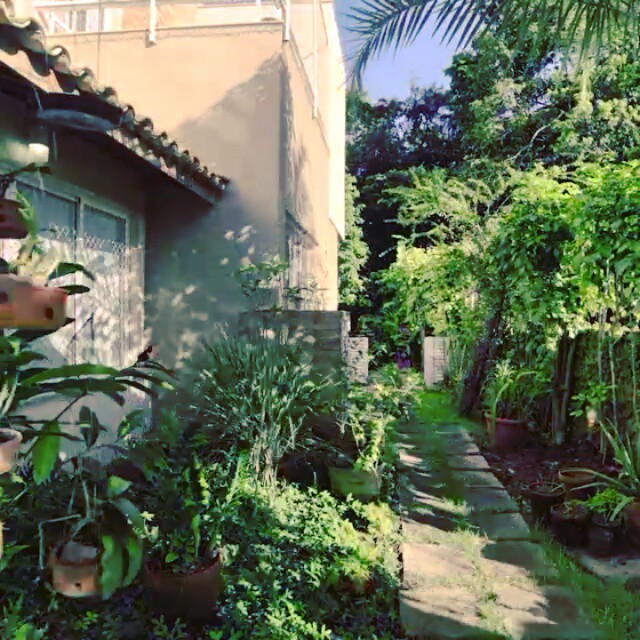
A few more days went into writing scripts and linking things together. Then I hit a wall on "how the hell can I loop the clock without looping the footage?". I was explaining the process to my dad when he gave me a great suggestion which worked nicely in the script.
Now, why did I need that done now? In the original plan I had a phone and hands controlling the app, remember? I still had to shoot that element, shoot myself as a scientist, come up with a costume, greenscreen the whole thing, and see if it worked. I started with the scientist part. Cogo (Felipe Sampaio) came over and we spent hours disassembling the living room and fitting it as a soundstage with a load of lights, cables, microphone, camera and tripod. We decided to use a camera which I had never worked before - the original BlackMagic Cinema Camera -, but that should do the job better than my own - Canon 5D3.
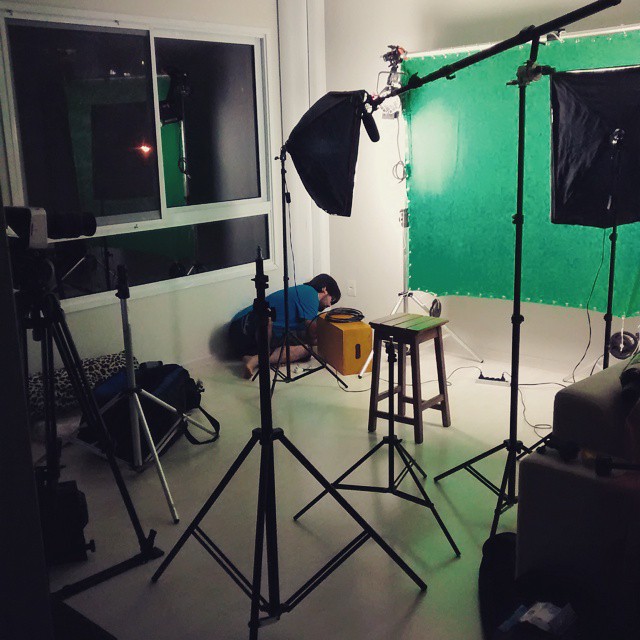
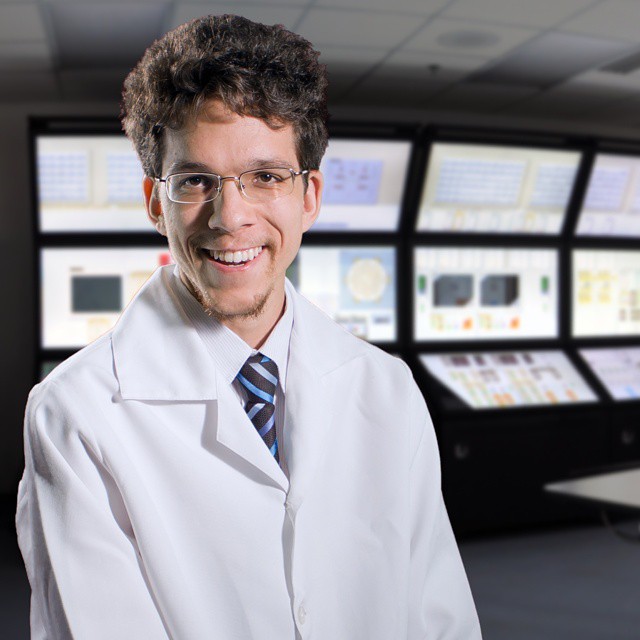
Set is ready, time to shoot. I didn't mention the several round trips I made around town getting shirts, ties, glasses and a labcoat from friends. A few minutes of rehearsal, timing is on, 30 seconds is the max time limit, but I also couldn't fall too short from that. And we couldn't cut. Each take had to be good from start to finish. After a few (several) more hours, we got two good versions, one with glasses, one without. Before taking down the set we brought the footage into the notebook and tested the greenscreen key. It worked almost perfectly in the first attempt. Approved!
We still had the hands to shoot, but that would require a different rehearsal, I needed to work on the motion graphics in the phone, we needed more people to handle lights, it wasn't doable on that day. We took some of the gear out of the living room and into my bedroom (yay, sleep with 3k+ lights and tripods around!).
The following morning was all into solving the motion graphics to match the voice over and the timelapse. We got an extra pair of hands, I got several pairs of gloves - I thought it would preven the phone to feel my fingers touching the screen, of course I was wrong - and spent way more time than I like to admit practicing the hand movements and fixing the gloves issue with TONS of white tape, until the phone couldn't feel my fingers anymore, and still, it would have to be at a very specific angle. How could I anticipate any of that?
Then we moved onto light rehearsing. Lighting had to change during the sunset and there were two nights in the lapse as well. All of this still had to keep the greenscreen evenly lit and not bouncing too much on my hands or phone. We were using the same lens used on the timelapse so distortion matches, perspective feels right and all. It was a 14mm, on full frame. We had to be ridiculously close to the greenscreen.
To help with the light changes we had an audio cue that played whenever we rolled so we could adjust the timing for the lights. "Ok, from this word to this sentence, you have to move the light down and then point it elsewhere before this other word starts" - that's the kind of instructions we had on set. We were also shooting raw, so reviewing the clips was a little too complex. For that reason we just kept on shooting until the card filled up and we felt some takes could work. After unloading the cards we tested the greenscreen and timing and there were a few special ones in which everything worked together (the variables: phone feeling my fingers, me getting the animation timing right, greenscreen shadows and bounces, sunset light timing, day-night-day-night light transition, camera not skipping frames.
From there I felt I had all the "real world" pieces I need to put the ad together. Time to go into comp and face some different issues!
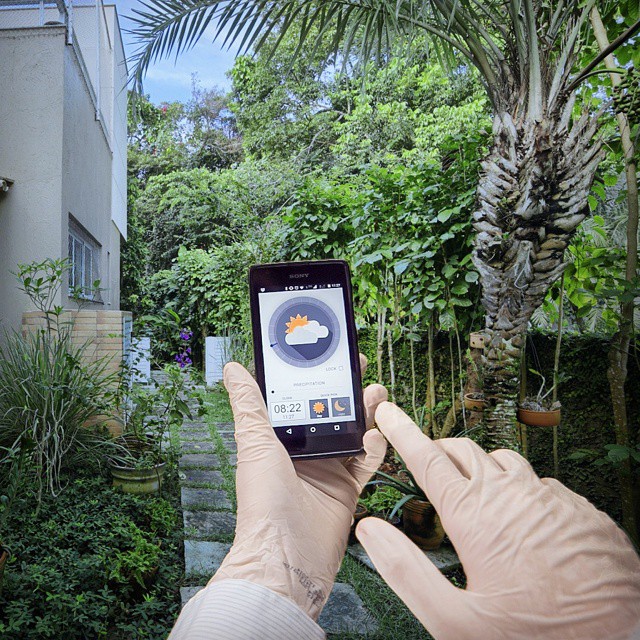
Fortunately, this time the whole imagination idea got most of it right and I could control each element separately. Being so picky when shooting and processing them gave me great power in post, saving me from major issues. I'm not gonna describe the comp process because it would be too confusing (more than the shooting process, definitely), but it had three stages.
At first, when I realized I had everything I needed, I packed everything together and made a quick cheap comp that proved the idea worked. That numbed my mind, feeding it with thoughts of "see, it worked, it's gonna be perfect!" and then I started to procrastinate because "if everything worked so well up until now, I'm definitely sure something will come up to fuck my life", I bet you know that feeling. Nothing works without hiccups until the end.
In the second stage I let the project sit in my hard drive for about two months. I eventually looked at the rough version and fed me the same positive thoughts that "yeah, you made it! it's gonna be awesome!" but that wasn't enough to gather the courage to actually put the project to the test and push to the end. Then, one day I was biking around and another idea hit me, for a different project, one that I very much liked. Fortunately, I can't keep TWO things incubating at the same time so, in order to focus on the new idea I had to finish this app thing.
The third stage - current one - is when I decided to face whatever issues would come up when I started to adjust the footage and merge it all together to achieve one final product. I've been doing it for a few days and was able to keep it flowing pretty well so far, fixing stuff, getting feedback and adjusting minor details. I was really lucky that the original footage/plates were shot properly and that I could take my time with them. Also, the fact that I had other people involved gives me an extra boost to finish it and don't be the guy that holds up everyone's projects forever!
In this entire time I've questioned my decisions, thought there would be better solutions for my problems, failed several times, started over about the same amount of times, lost precious time overplanning, and now, close to the end, I realize that if I just kept on going in spite of thinking there would be better solutions or better gear, I could probably have finished weeks (months?) ago. That's something that also applies to my demo reel and that I'm starting to blend with my work pace.
There will ALWAYS be a better way to do things, faster ways, cleaner ways, better gear, better software, better plugins, but if I keep on waiting for them, I'll never get anything done. We have to kill and mutate our ideas several times in the process of bringing them from our minds into reality. It's up to us if this compromise will still keep them true to their original form or if they'll get completely diluted and shapeless, turning into something that you'll look back and think "heh, this is nothing like what I thought!". I have several of these too, and even though they mostly don't make out of my own audience, they're important to learn the kind of things I can change and give up and the ones I have to carry along.
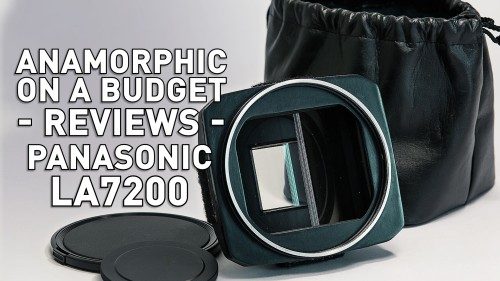
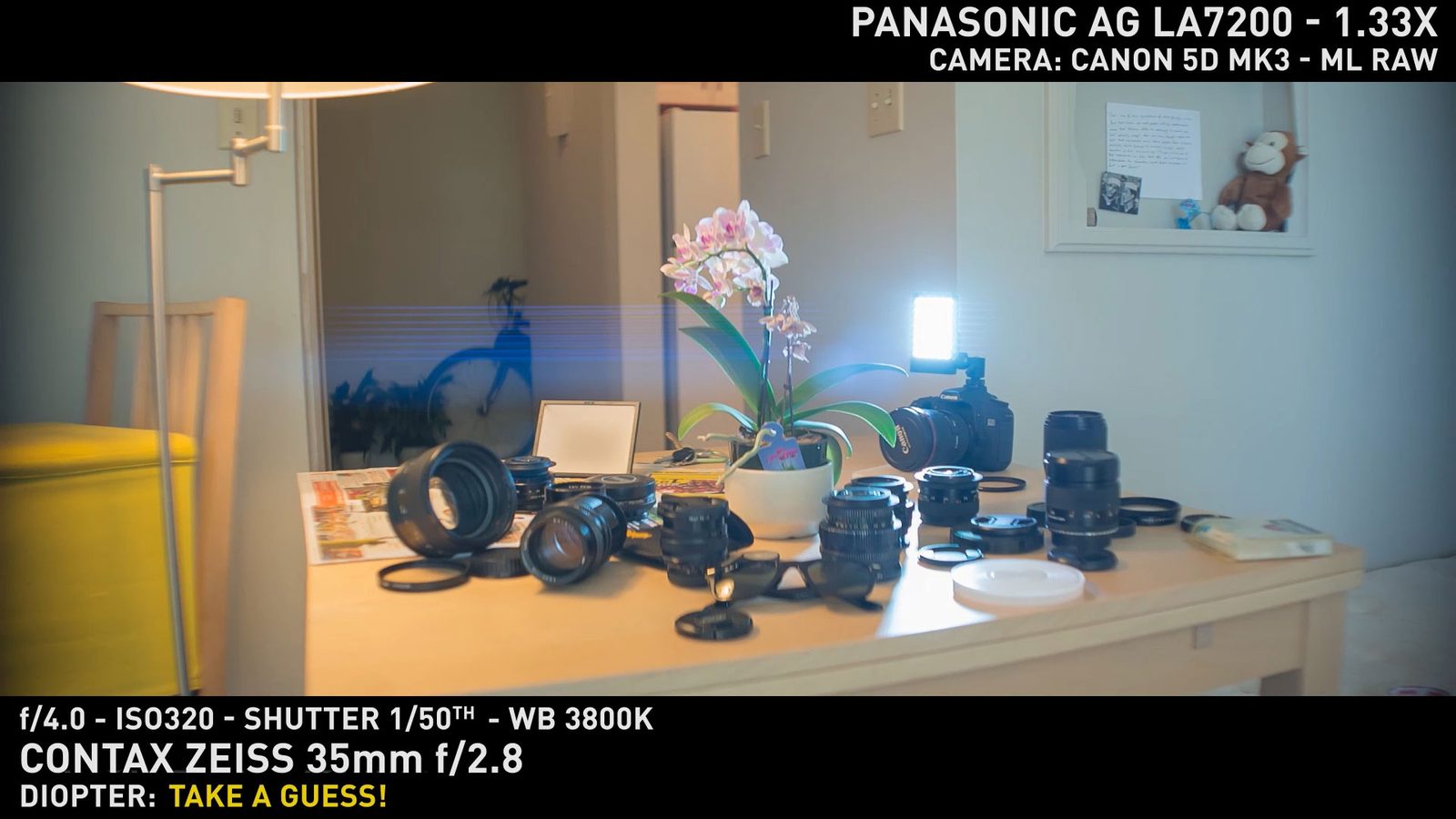
Going with one of the most common anamorphic adapters for beginners, the Panasonic LA7200 gives great performance at wide angles, but struggles under a lot of circumstances.
Many thanks to mrs. Gabi Akashi for helping me out in the World Tests!
USEFUL LINKS:
All the RED links on this post are part of eBay's Partner Network, so if you purchase anything through them, you're helping me to keep this project going.
You can support this project on Patreon. Make your contribution and help the Anamorphic Cookbook!